Best Kayak Anchor Trolley & Stake-Out Pole Systems for 2026
 Hudson Reed
Written by Hudson Reed
A buddy of mine spent two seasons fighting his kayak in a tidal creek before he figured out the problem wasn't his anchor. It was where the line came off the boat. He'd cleat it to the side, the current would swing him broadside, and he'd spend half the tide white-knuckling the gunwale instead of fishing. One anchor trolley fixed it. That's the thing nobody tells you when you start shopping: the best kayak anchor trolley doesn't hold your boat at all. It just moves the attachment point to the bow or stern so your actual anchor (or stake-out pole) can do its job without flipping you.
So this guide is built around pairing, not just ranking gear. A trolley plus the right hold for your water: a stake-out pole on shallow flats, a folding grapnel out deep. I've sorted through what's actually buyable and current on Amazon in 2026 and lined up four systems that cover the realistic range, from a $11 pulley kit to a $77 fiberglass push pole.
Quick Picks: Best Kayak Anchor Trolley and Stake-Out Systems
| Product | Best For | Price Range | Rating |
|---|---|---|---|
| YakGear AK1 Deluxe Anchor Trolley | The trolley most anglers should buy | ~$37 | 4.7/5 |
| ARTSEWPLY Anchor Trolley Kit | Cheapest way to rig a trolley | ~$11 | 4/5 |
| CALPALMY 1.5 lb Folding Grapnel Anchor Kit | Deep water, lakes, mild current | ~$19 | 4.5/5 |
| YakAttack ParkNPole 6' Stakeout Pole | Shallow flats, creeks, skinny water | ~$77 | 4.5/5 |
Trolley first, anchor second: why the order matters
An anchor trolley is a continuous loop of line that runs bow-to-stern down one side of your hull through two pulleys, with a ring you can shuttle to either end from your seat. You clip your anchor or stake-out pole to that ring. Then you pull the loop to slide the attachment point all the way forward or all the way back.
Here's why that's the foundation. When you anchor straight off the side of a kayak, wind and current hit you broadside, and a kayak has almost no resistance to rolling that way. Anchoring guidance from Kayak Angler and several paddling-safety sources is blunt about it: at roughly a 45-degree angle to current, your kayak takes on about four times the tipping force compared to facing into the flow. The trolley exists to let you keep that anchor point at the bow or stern so the boat weathervanes into the current instead of getting shoved over.
The critical rule, and I mean critical: the trolley ring must be at the very bow or the very stern when you're deployed, never amidships. A ring sitting in the middle of your loop while you're hooked to the bottom in moving water is how people swim.
What about a quick-release? Do I really need one?
Yes. Non-negotiable in any current. Rig a float and a carabiner where your anchor line meets the trolley ring so you can pop the whole thing free in one motion and chase it down later. If a gust swings you wrong or you get pulled toward a strainer or a bridge piling, you are not going to calmly untie a wet bowline. You're going to want one yank. Build the bailout in before you need it.
The four systems, and which water each one is for
YakGear AK1 Deluxe Anchor Trolley
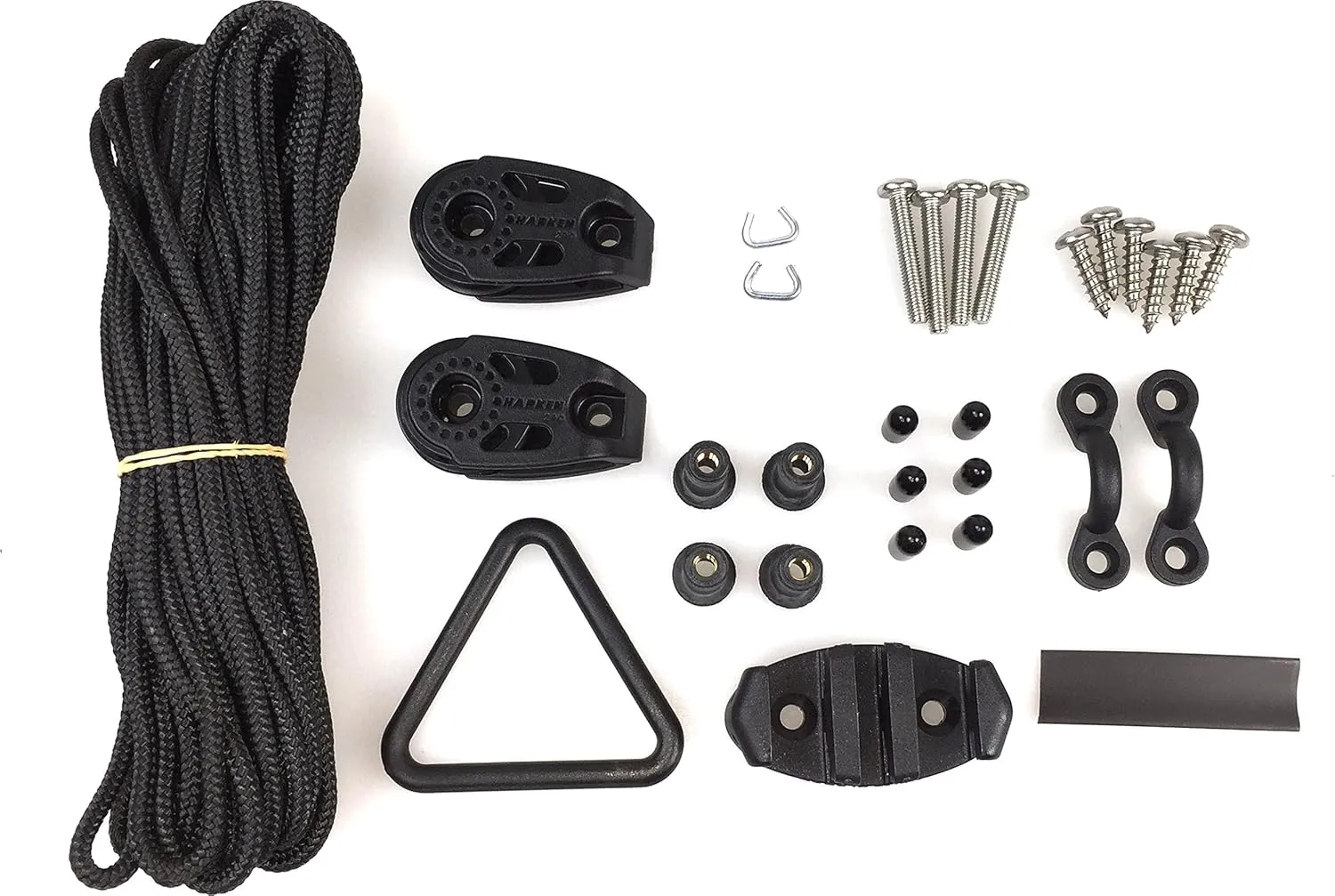
This is the one I'd hand most people. The YakGear AK1 Deluxe Anchor Trolley comes with two real pulleys (not the little plastic eyelets the bargain kits use as "pulleys"), 30 feet of line, pad eyes, a cleat, and the ring. The kit contents match what YakGear lists on its own product page. It runs around $37 and holds a 4.7-star average across 130-plus ratings.
Who it's for
Anybody who wants a trolley that glides under load and isn't going to bind up with grit in it after a season of saltwater. The smooth pulleys are the whole point. A trolley you have to fight defeats the purpose.
Pros & Cons
- Pro: Actual pulleys mean the ring slides easily even with an anchor hanging on it.
- Pro: Complete kit, including the cleat and pad eyes, so you're not sourcing parts.
- Pro: YakGear is a known kayak-rigging brand with parts support.
- Con: Mounting hardware is designed for through-bolting or rivets (more on no-drill below).
- Con: 30 feet of trolley line is plenty for the loop but is not your anchor rode.
Around $37 on Amazon.
ARTSEWPLY Anchor Trolley Kit
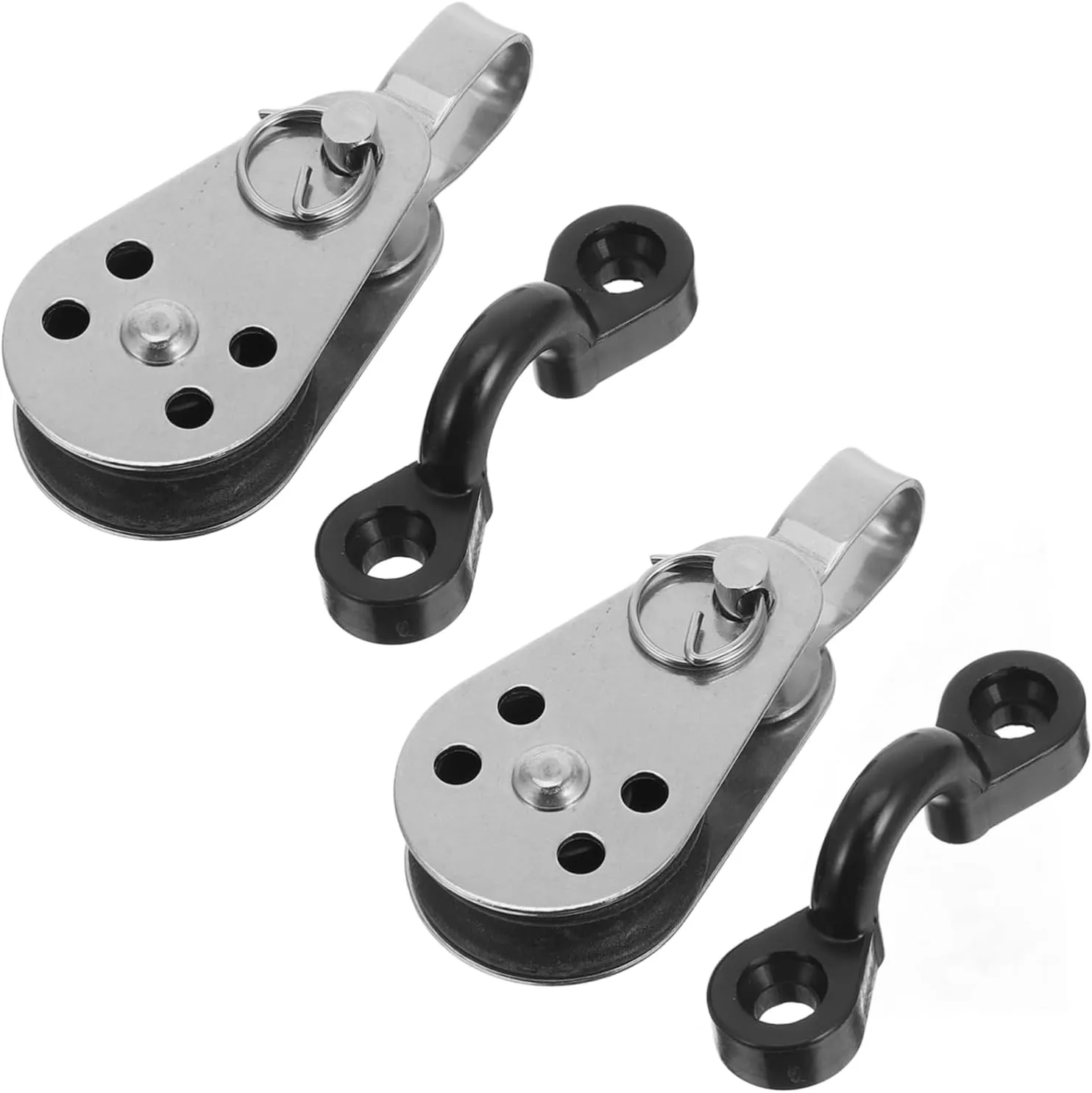
If $37 feels like a lot to spend before you've even bought an anchor, the ARTSEWPLY trolley kit gets you two stainless pulleys, two nylon pad eyes, and the screws for around $11. It's listed since January 2025 and sits near 4.3 stars on 135 ratings.
You might also enjoy: Best Fishing Coolers 2026: Hard vs Soft for Truck, Boat, and Kayak
Who it's for
The angler rigging a first kayak on a budget, or someone who already has rope and a ring lying around and just needs the hardware. Calm lakes and ponds where you're not relying on the trolley to save you in a rip.
Pros & Cons
- Pro: About a third the price of a brand-name kit.
- Pro: Stainless pulleys and pad eyes resist rust better than you'd expect at this price.
- Con: No line, ring, or cleat included. You're assembling the rest.
- Con: Hardware tolerances are looser than YakGear's. Fine for fresh water, less confidence-inspiring for hard saltwater duty.
Around $11 on Amazon. Add a length of paracord and a ring and you've got a working trolley for under $20.
CALPALMY 1.5 lb Folding Grapnel Anchor Kit
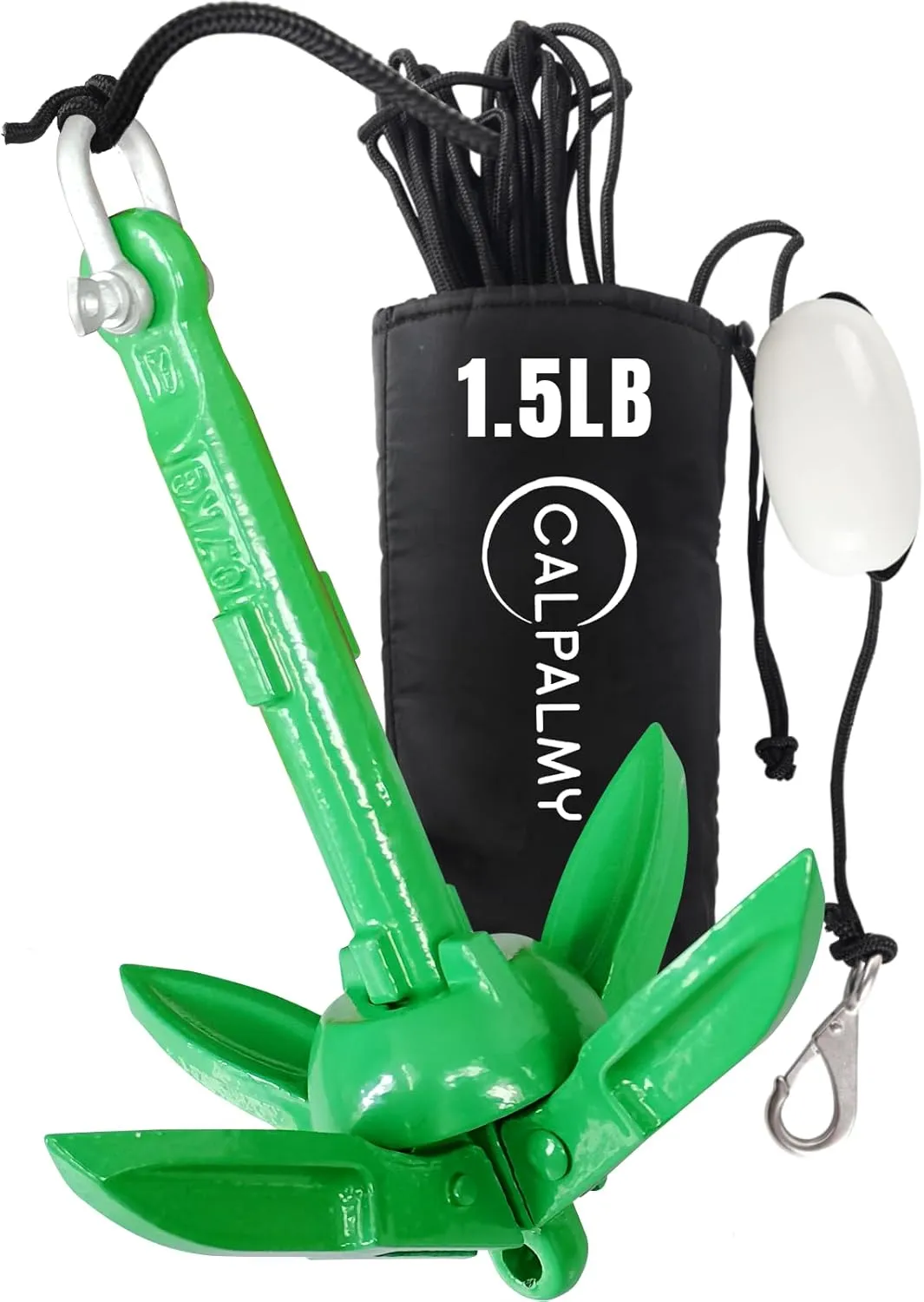
Once you've got a trolley, you need something to hold the bottom. For anything deeper than about three feet, that's a folding grapnel. The CALPALMY 1.5 lb anchor kit is the no-drama pick: a four-fluke folding anchor, 32 feet of marine rope, a snap hook, a float, and a storage bag for around $19. New listing as of March 2026, already up to 4.5 stars on 214 ratings.
Who it's for
Lake anglers, reservoir crappie and bass folks, anyone fishing water with a soft or rocky bottom in the 4-to-20-foot range with mild to moderate current. A 1.5 lb grapnel is the right call for a 12-foot kayak in calm to moderate conditions. If you're routinely in strong tidal flow, step up to a 3 lb.
Pros & Cons
- Pro: Folds flat for storage, which matters in a cockpit.
- Pro: The flukes bite mud, gravel, and weed beds well.
- Pro: Comes with the rope and float, so it's a complete deep-water solution out of the box.
- Con: Grapnels can wedge into rock. Rig a trip line through the crown so you can pull it out backward.
- Con: Useless on a hard sand flat in skinny water, where it just skips. That's stake-out pole territory.
Around $19 on Amazon.
YakAttack ParkNPole 6' Stakeout Pole
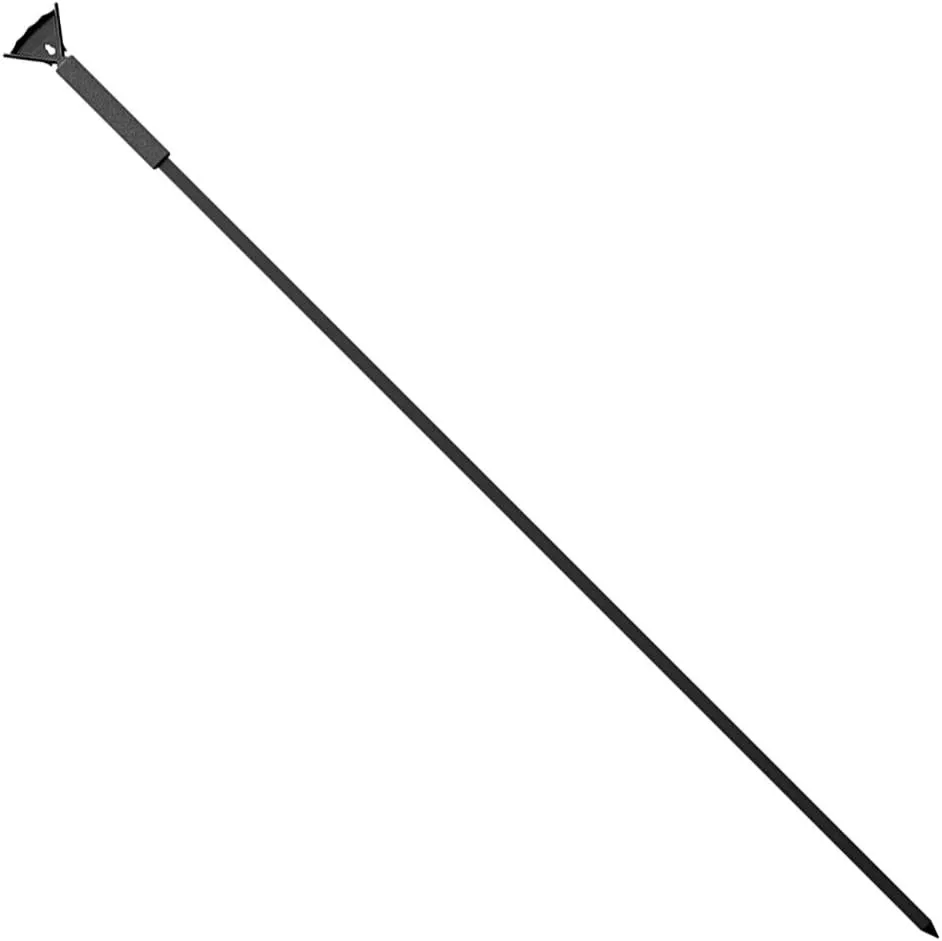
Now the shallow side. On a flat, in a creek, or anywhere you can see bottom, a folding anchor is the wrong tool. You want a YakAttack ParkNPole. It's a 6-foot formed-fiberglass push pole with a pointed nylon foot; YakAttack's spec page lists the same fiberglass build with a floating, UV-stable nylon foot and tip. You jab it into sand or mud, clip it to your trolley ring, and you're locked in place. Silently. No splash, no clank, no anchor line spooking a tailing redfish ten feet away. Roughly $77, 4.6 stars on 268 ratings.
Who it's for
Inshore saltwater anglers chasing reds, trout, and flounder on the flats. River smallmouth guys working skinny gravel runs. Anybody fishing water under about three feet where stealth wins. It doubles as a push pole to move between spots without paddling.
Pros & Cons
- Pro: Dead silent. The single biggest reason to own one.
- Pro: Instant deploy and instant release. No rope to manage.
- Pro: Floats and is UV-stable, so it survives being left strapped to the deck.
- Con: Useless past the length of the pole. Six feet of pole means roughly four feet of usable water.
- Con: Priciest item here by a wide margin.
Around $77 on Amazon. The pole clips right onto your trolley ring, which is exactly how the system is supposed to work: one trolley, two ways to hold, swap by depth.
How do I rig an anchor trolley without drilling holes in my kayak?
Plenty of anglers don't want to put holes in a $1,500 hull, and you don't have to. The trolley needs two anchor points (one near the bow, one near the stern) plus the cleat. Here's the no-drill approach.
You might also enjoy: Best Wading Boots 2026: Felt vs Rubber Sole
- Use your existing hardware. Most fishing kayaks ship with molded carry handles, deck pad eyes, or footman loops at the bow and stern. Run your trolley line through those instead of mounting new pad eyes. Many boats already have everything you need.
- Add gear-track mounts where there's a track. If your kayak has accessory rails, a track-mounted pad eye or pulley base slides on and tightens down with a thumbscrew. No drill, fully removable, repositionable.
- Reach for marine adhesive pad eyes as a last resort. 3M VHB or marine adhesive pad eyes bond to a clean, prepped hull. They work, but they're the weakest of the three for a load-bearing point, so favor handles and tracks first and treat adhesive as backup.
- Run the loop and set the cleat. Thread the line bow-to-stern through both pulleys, tie in your ring, and clip a small cleat or jam cleat within seat reach to lock the loop wherever you want the ring. Test it dry in the driveway by pulling the ring fully forward and fully back before you ever hit the water.
That's a complete, removable trolley with zero holes. If you later upgrade to a permanent setup, through-bolting with backing washers is stronger, but the no-drill rig holds fine for an anchor on a kayak.
Buying guide: matching the system to your water
Depth is the deciding factor
This is the whole decision in one line. Under three feet, stake-out pole. Over three feet, folding anchor. If you fish both, own both and run them off the same trolley. The pole is faster and quieter; the anchor reaches deep. They're not competitors, they're a pair.
Match anchor weight to current, not just boat size
A 1.5 lb grapnel covers most lake and pond fishing in a 12-foot kayak. Once you add real current (tidal creeks, big rivers), bump to 3 lb so you're not dragging. More rode helps too. The working rule is roughly 5 to 7 feet of line for every foot of depth so the pull stays low and horizontal instead of yanking the flukes straight up.
Pulleys are where the cheap kits cut corners
The difference between a $11 kit and a $37 kit is almost entirely the pulleys. Real sheaves spin; the plastic eyelets some kits call "pulleys" just create friction, and a trolley you have to fight is a trolley you stop using. If you fish salt, this matters double. Grit and corrosion seize the cheap ones fast.
Stainless or bust in saltwater
Every fastener, ring, and snap on a saltwater rig should be stainless. Carbon-steel hardware will weep rust onto your deck within a few trips. Both trolley kits here use stainless, which is the right baseline.
Our pick
For most people, the move is the YakGear AK1 Deluxe Anchor Trolley paired with the anchoring method that fits your water. If you're a lake or river angler in deeper water, add the CALPALMY 1.5 lb folding grapnel kit and you're rigged for under $60 total. If you're an inshore flats angler, skip the anchor and run the YakAttack ParkNPole off that same trolley for silent, instant holds in skinny water.
Going cheap? The ARTSEWPLY kit plus your own rope and a grapnel gets you a functional setup on a pond for the price of a couple of crankbaits. Just don't trust the bargain hardware in a tidal rip.
However you rig it, log where it actually worked. The spot that holds in an east wind isn't the same spot that holds when the tide turns, and that pattern is worth remembering. I keep mine in Bushwhack so I can see which anchor-up spots actually put fish in the boat over a season. Boat control is half of kayak fishing. Dialing in the hold is what lets you fish the cast instead of the drift.
Get fishing tips in your inbox
New guides, seasonal tactics, and gear picks — about once a month, no spam.