30 Fishing Challenges to Level Up Your Skills
 Cameron Spanos
Written by Cameron Spanos
Most fishing challenges are bragging contests. Biggest fish, most fish, longest streak. The ones that make you a better angler are constraints: one fly all day, one pond for twenty visits, a fish in the net before 5 a.m. A constraint takes away your favorite excuse and makes you solve the water in front of you.
Below are 30 of them, grouped by the skill each one builds. Every challenge matches a real badge in Bushwhack (there are more than 200), and the finish line is the badge's own requirement, so there's no arguing about whether you did it. You don't need the app to play. A notebook and a tape measure work fine.
Which fishing challenges should you pick first?
Pick one challenge that fits water you can reach in under half an hour, and one slow challenge that runs in the background all year. That's it. Two at a time. An angler chasing six badges at once is just fishing the way they always do and hoping the app notices.
Match the challenge to the hole in your game. If you change flies every ten minutes, take the one-pattern day. If you only fish Saturday mornings, take the night or pre-dawn challenge. If you've got one lake wired and nothing else, go collect new spots. The challenge that sounds annoying is usually the right one.
State agencies have worked this out too. North Dakota Game and Fish has run fish challenges for five years and drawn about 1,000 entries, according to the department's magazine, North Dakota Outdoors. The 2026 version asked for 100 fish between May 1 and Aug. 15. Any species counted and size didn't matter. Marketing coordinator Cayla Bendel told the magazine the department wanted "to bring people back to the joy of fishing, what it's like to just catch any fish." Good rule for picking your own: simple enough to explain in one sentence.
Start here: five beginner challenges
1. First Catch
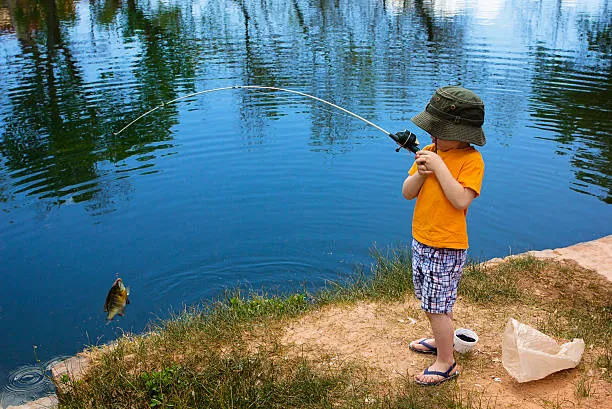
Catch one fish and write it down. The fish is the easy part. The habit is the lesson: date, spot, species, length, and what it ate. You're done when one fish with a count is in your log. Measure it even if it's six inches, because the size challenges further down are built on measured fish.
2. Home Waters
Log your first fishing location. This one teaches you to name a spot precisely. "The reservoir" isn't a spot. The inlet cove on the north arm is. You've finished when one trip is logged to a saved location and you could send a friend to it without a phone call.
3. First Fly
Log your first fly or lure against a fish. Tying a pattern to a catch is how you find out what's doing the work in your box. Log a season and you'll likely find a few patterns doing most of the catching while the rest of the box rides along.
4. Weekend Warrior
Fish every weekend for a month. It teaches frequency, which beats duration for learning. An hour at a neighborhood pond counts. Log every trip, including the ones with no fish. The badge wants a fish on four weekends running, so a blank Saturday means going back Sunday.
5. Loyal Angler
Fish the same spot on 20 different days in one year. Nothing teaches seasons faster. You'll see where fish sit in cold water, where they go when it warms, and what a foot of extra water does to the place. Twenty separate dates at one location is the finish line.
Clock challenges: night, dawn and the full day
6. Early Riser
Catch a fish before 7 a.m. The skill is preparation: rods rigged the night before, a walk-in you already know, a first cast planned in daylight. Check your regulations first, since legal fishing hours vary and plenty of parks and access sites are closed before sunrise. A logged catch with a time earlier than 7:00 finishes it.
7. Night Fisher
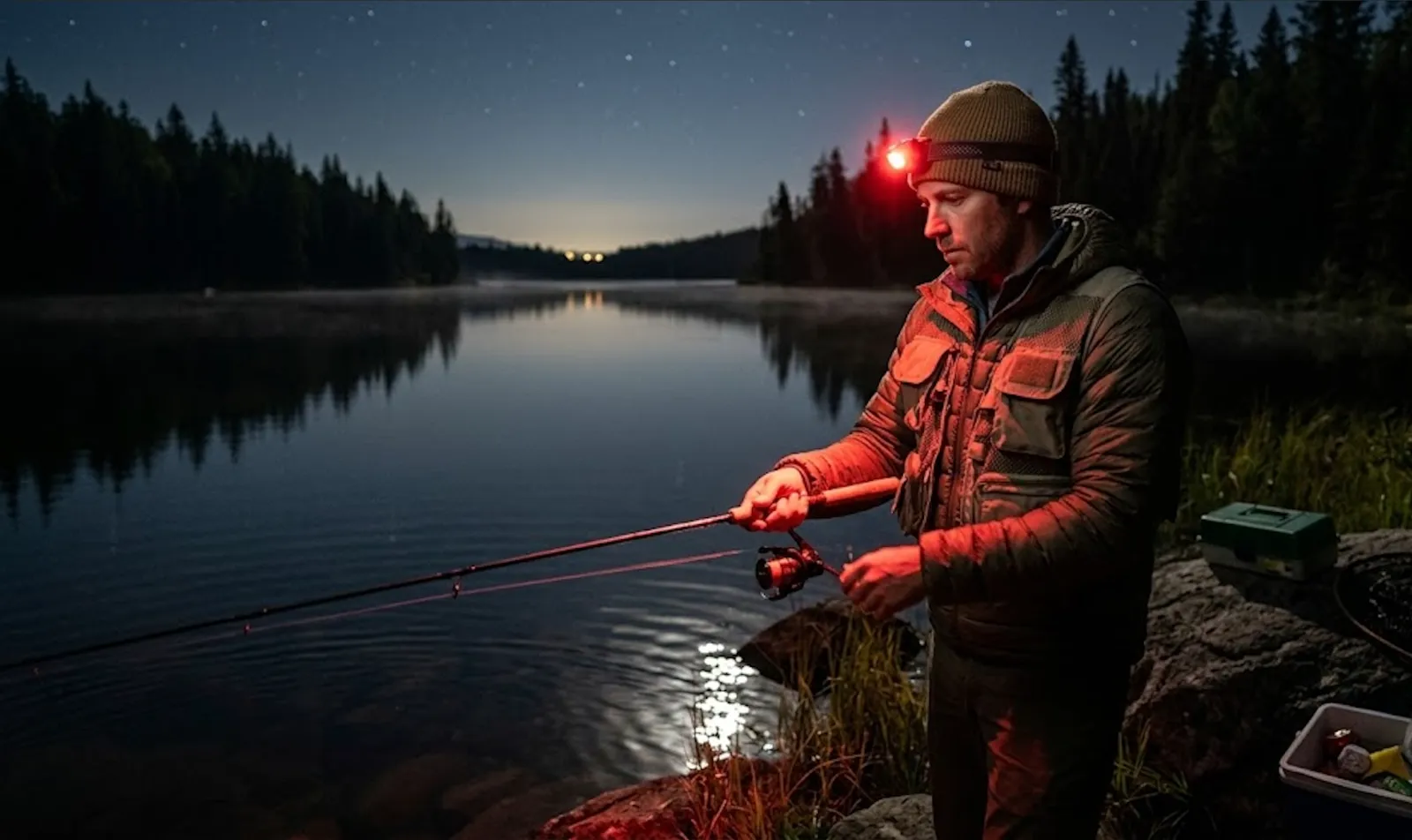
Catch five fish at night. Darkness strips fishing down to feel and sound, which shortens your casts and simplifies your rigs in a hurry. Some waters are closed to night fishing, so read the rules for that specific water. Scout the bank in daylight, carry a headlamp and a spare, wear a life jacket in a boat, and tell someone where you'll be. Wading unfamiliar water in the dark is a bad trade. Stay on the bank.
8. Dawn to Dusk
Fish from sunrise to sunset in one day. Most anglers only ever see their water for the same three hours, and this fixes that. The slow midday stretch is the real lesson, because it forces you to go looking for fish in shade and depth and moving water. Bring more water, food and sun protection than you think you need. Put a time on every entry. The badge reads the day from your log: something timed in the morning, the afternoon and the evening of the same date.
Tackle constraints that teach technique
9. Minimalist
Catch ten fish on a single fly pattern in one day. This is the best teacher on the list. With the fly taken off the table, the only things left to change are depth, speed, drift and where you're standing, and those are what catch fish. Lure anglers can run the same rule with one bait. Ten fish, one pattern, one date.
You might also enjoy: Can a Cheap Fly Rod Catch Wild Trout? My $50 Amazon Wakeman Challenge
10. Fly Swap
Catch fish on five different flies in one day. It's the mirror image of the last one, and worth doing second. You learn to read the moment a pattern stops working and to change quickly instead of casting on hope. Your knots get faster too. Done when five patterns each have a fish on the same date.
11. Rod Rotation
Catch fish on three different rods in one day. Carrying a light rod, a medium one and something heavier shows you what each is for far better than a spec sheet. You'll feel which one turns over a big fly, which one protects light tippet, and which one you reach for without thinking.
12. Favorite Rod
Catch 100 fish on the same rod. A slow one. Somewhere past fish fifty you stop thinking about the rod at all: you know its casting range, how hard you can lean on it, how it loads at close distance. The finish line is 100 fish logged against one rod, so name the rod on every catch.
13. Size Variety
Catch fish at least 10 inches apart in length on the same day. A hand-sized bluegill and a decent bass from one pond will do it. You have to change targets on purpose, which means changing the size of what you're throwing and where you throw it. It only counts with a tape: the day's shortest and longest fish need ten inches between them.
Species, size and numbers
14. Species Focus
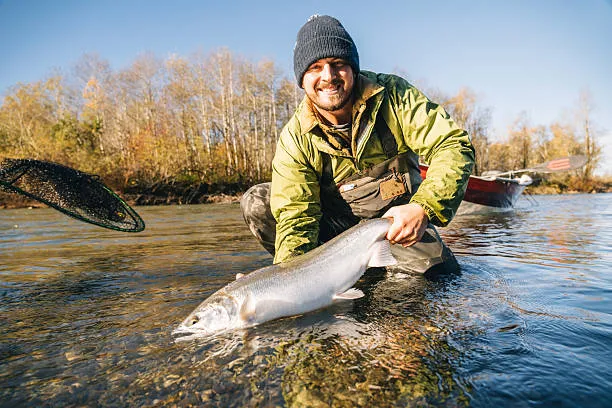
Catch 50 of one species in a month. Pick something abundant near you, like bluegill, crappie or stocked trout. A month spent on one fish teaches its depth, its feeding hours and its moods better than a year of fishing for whatever bites. If you keep any, daily and possession limits apply, so check them before the first trip.
15. Size Progression
Beat your personal best five times. Each new best is harder than the last, and that's the point: bigger offerings, fewer bites, better water, more patience. Measure every fish. An estimated best is one you can't honestly beat.
16. Freshwater Double Header
Land two freshwater fish of 24 inches or more in one day. First figure out which species near you reach that size with any regularity (carp, pike and catfish are common answers), then fish for them deliberately. Big fish need care. Keep them in the water while you get the tape out, and check size and season rules for the species.
17. Freshwater Hat Trick
Three fish of 24 inches or more in one day. One big fish is luck. Three is a pattern. After the first, write down the depth, the cover and the time, then go find the same setup somewhere else on the water. That habit is the skill.
18. Quantity King
Catch 100 or more fish in a single day. It teaches efficiency: finding a school, staying on it, unhooking fast. It's realistic on panfish and not much else. Pinch your barbs so releases take seconds, and know the limit if any are going home with you. The gentler version is North Dakota's, which spread 100 fish across a summer.
New water against known water
19. Explorer
Fish 25 different locations. New water makes you read it cold: where's the depth, where's the current, where would a fish sit? You get quicker at that with every spot. Confirm public access and that the water is open before you drive. Twenty-five saved locations with a trip at each one finishes it.
20. Triple Threat
Catch fish at three locations in one day. The lesson is knowing when to leave. I'd give each spot an hour, and move the moment you've caught one. Anglers who can't leave fishless water lose more days than anglers with bad casts.
21. Home Water Hero
Catch 100 fish at one location. Explorer in reverse. By fish 100 you know which bank fishes in wind, where they go when the level drops, and which stretch isn't worth the walk. Every fish has to be logged to the same saved spot.
Consistency, blanks and comebacks
22. Skunked Survivor
Get skunked ten times and keep going. This is a logging challenge in disguise. A blank day with the conditions written on it is information, and a blank you never recorded is just a bad memory. In Bushwhack a blank is a trip saved with the count left empty or at zero. Ten of those and you're done.
You might also enjoy: Fly Fishing on Your Lunch Break: How to Get a Real Hour on the Water
23. Comeback Kid
Catch a fish after three skunk days in a row. It rewards changing something. Between blanks, switch one variable at a time: the water, the depth, the hour. Three identical blank trips teach nothing.
24. Underdog
Catch a fish of 20 inches or more the day after a skunk. You can't plan this one. It only happens to people who go back the next morning, which is the whole lesson.
25. Perfect Week
Catch a fish every day for seven days. Weather won't hold for a week, so you'll end up finding fish in wind, rain, heat or whatever else shows up. Easy species are fair game. Seven straight dates, each with a fish.
26. Consistent Angler
Log a fish in 12 consecutive months. For most of the country that means learning cold-water fishing, and in the north it can mean ice. Follow your state agency's ice safety guidance, check local conditions, and don't go alone. Some species have closed seasons in winter, so check what's open.
27. Perfect Month
Catch a fish every day for a month. The hardest thing here, and mostly a test of your schedule. It teaches you how little time a fish takes when the pond is on the way home.
Fishing with other people
28. Fishing Buddy
Fish with friends 25 times. Watching someone else work the same water is the fastest instruction there is, and it's free. Add the people you fished with to each trip, and 25 shared trips completes it.
29. Social Fisher
Fish with friends 100 times. Somewhere along the way, take a beginner. Explaining why you're standing where you're standing exposes every habit you can't justify.
30. Networking Pro
Fish with 50 different friends. Each one brings their own water and their own way of doing things. Clubs, group outings and kids' fishing days get you there far sooner than waiting on the same two friends.
How do you track a fishing challenge?
Write down the same handful of facts for every trip: date, spot, species, count, length, the fly or lure, the rod, and the time of day. Take a photo of anything you'll want to prove later. That covers every challenge above, on paper or in an app.
Official programs show how much proof is reasonable. The West Virginia DNR's Master Angler award as the agency describes it, takes six slams covering 22 species entries, each slam finished inside one calendar year, with a minimum length per species (12 inches for a largemouth) and a time-stamped photo of the angler holding each catch. North Dakota's 100-fish challenge asked for one photo and a tally by species. Somewhere between those two is plenty for a personal challenge.
The reason to use an app instead of a notebook is that the counting happens for you. Bushwhack's log records species, size, location, fly or lure, rod, style, time of day, moon, weather and water conditions, and it keeps blank days. Badges that are a running tally show how far along you are. The app has goals as well, for a target of your own. Logging and badges are on the free plan (Bushwhack pricing has the details), and you can try Bushwhack on a demo account before signing up.
The ones I'd skip
Perfect Month and Quantity King are the two that sound most impressive, and they're the weakest teachers on the list. Both reward free time and easy fish. If you only take one challenge from this page, make it Minimalist. If you take two, add Loyal Angler. One fly and one piece of water, repeated until both are boring, will do more for your fishing than any streak.
Going fishing? Write it down.
Bushwhack is a free fishing log that fills in the weather, moon and pressure for you, then shows which spots, flies and conditions actually produce. Blank days included.
Get fishing tips in your inbox
New guides, seasonal tactics, and gear picks, about once a month, no spam.