2026 Fishing Regulation Changes Every Angler Should Know
 Hudson Reed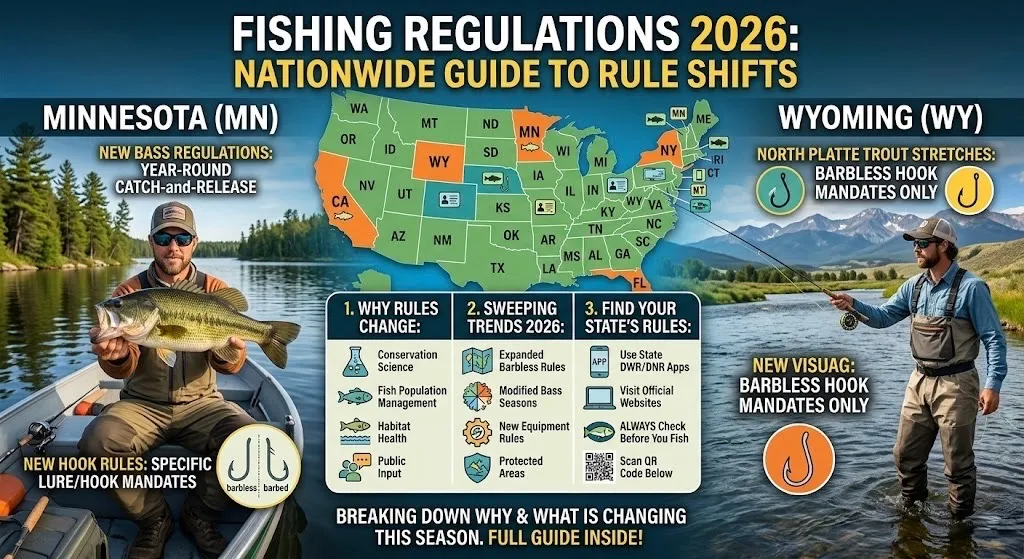
Written by Hudson Reed
Every season, state fish and wildlife agencies quietly update their rulebooks, and 2026 brought more changes than most. If you haven't cracked open your state's regulation booklet yet, you could be fishing outside the law without even knowing it. 2026 fishing regulation changes span everything from year-round catch-and-release bass seasons and revised hook configurations to new gear restrictions on premier trout rivers. This post breaks down the categories of change, highlights confirmed updates from state agencies, and gives you a practical framework for staying legal wherever you fish.
Disclaimer: Fishing regulations vary by state, water body, and sometimes by specific zone within a water body. The examples in this post reflect confirmed changes from official agency sources as of the publication date, but regulations can be amended mid-season. Always verify current rules directly with your state fish and wildlife agency before you fish.
Why Fishing Regulations Change Every Year
Regulations aren't arbitrary. They follow the science. State fisheries biologists run ongoing population assessments: electroshocking surveys, creel surveys at boat ramps, spawning ground counts, and age-structure analysis from scale samples. When a species is recovering, managers can open up more opportunity. When a stock is under pressure, they tighten the screws.
A few forces are driving an unusually active regulatory cycle in 2026:
- Post-pandemic fishing surge: The spike in angler participation that started in 2020 put more pressure on popular fisheries than managers had modeled. Several states are now responding to survey data showing elevated harvest on key species.
- Warming water and shifting habitat: Cold-water species like trout and salmon are moving into deeper, cooler water earlier. Some states have adjusted season dates to reduce mortality from warm-water catch-and-release encounters.
- Gear evolution: New tackle configurations (multi-hook rigs, drop-shot setups, modern ice-fishing devices) sometimes outpace the written rules. Agencies are updating gear language to address tactics that weren't contemplated when the original rules were written.
- Interstate coordination: For migratory species like striped bass and Atlantic coast fish, the Atlantic States Marine Fisheries Commission (ASMFC) negotiates stock-wide harvest allocations. When the ASMFC adjusts total allowable catch, every state in the compact has to update its local rules to match its share.
The Biggest Confirmed Change: Minnesota's Year-Round Bass Season
The most-discussed regulatory change in 2026 is Minnesota's new continuous fishing season for largemouth and smallmouth bass on inland waters. According to the Minnesota DNR's official February 23, 2026 news release, bass fishing is now open all year, but with an important distinction between seasons:
"Bass seasons will alternate between harvest seasons and catch-and-release seasons with no fishing closures."
In practical terms, this means you can target bass year-round in Minnesota, you're just restricted to catch-and-release outside the traditional harvest season. The harvest season opener dates remain unchanged. This is a meaningful shift for ice anglers and early-spring open-water anglers who previously had to wait for the season to crack before they could legally target bass at all.
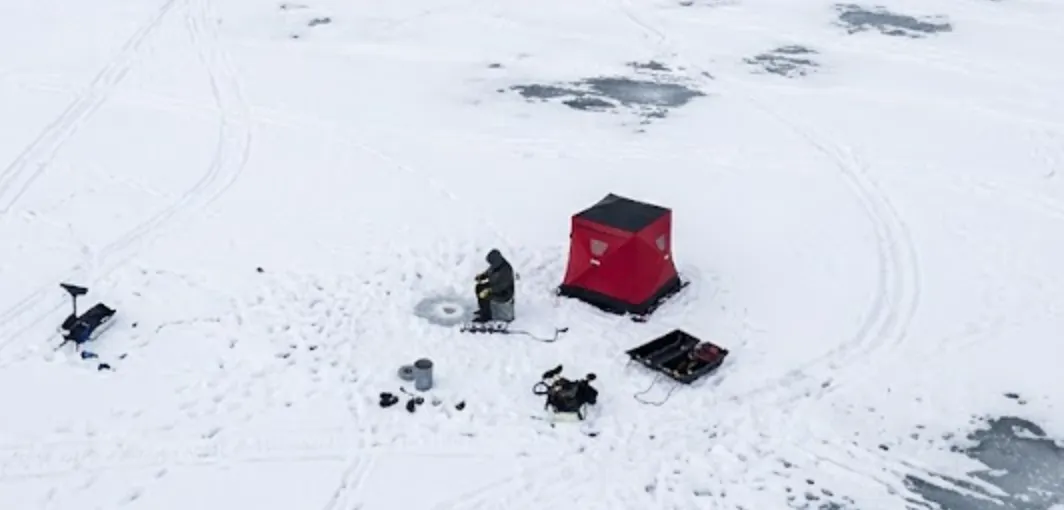
Minnesota also updated its tackle rules. The DNR confirmed that anglers may now use "up to three hooks within 18 inches on a single tackle configuration." The agency also clarified that only one bait is allowed per line, and stinger hooks are only permitted on artificial baits. Ice anglers got an additional update: nonmotorized hook-setting devices are now permitted.
Gear Restriction Trends: Are Barbless Hooks Coming to Your Water?
One of the clearest regulatory trends this season is tighter gear restrictions on heavily-pressured catch-and-release fisheries, particularly the requirement to use single-point, barbless hooks.
Wyoming's Game and Fish Department confirmed new gear rules on several celebrated stretches of the North Platte River below Seminoe Reservoir. According to the agency's official announcement, anglers on the Miracle Mile, Alcova Afterbay, Gray Reef, and Fremont Canyon sections must now use single-point, barbless hooks. The Wyoming rules also prohibit pegged attractors at Fremont Canyon and Gray Reef, and extend an artificial flies and lures-only requirement downstream at Gray Reef to Government Bridge.
These are significant restrictions on waters that attract anglers from across the country. If you've planned a North Platte trip for 2026 and you're packing your normal nymphing or streamer rig, review your hardware before you go.
The reasoning behind barbless mandates is straightforward: barbless hooks cause less tissue damage during removal, reduce handling time, and lower post-release mortality, especially on wild fish that are caught multiple times per season in popular tailwater fisheries. As more premium trout waters face heavy angling pressure, expect this kind of gear rule to spread.
Trout Regulation Changes: What's Shifting Nationally?
Trout regulations saw action in multiple states this cycle. A few confirmed examples from official agency sources:
You might also enjoy: Spring Crappie Fishing Tips: Ice-Out to Spawn
Minnesota shifted its stream trout harvest opener to a standardized date, the second Saturday in April every year (April 11 in 2026). The Lake Superior brook trout and splake season closure date moved to September 30. The Atlantic salmon individual limit was removed; the new rule sets a combined limit of five total salmon of all species on Lake Superior.
Wyoming added a spawning protection closure at Gray Reef on the North Platte: the area downstream of Ledge Creek is now closed from April 1 through May 15 annually to protect spawning rainbow trout. Separately, the daily trout limit on the Snake River from Jackson Lake Dam to the gauging station increased from three to six fish, with length restrictions removed. This is a harvest liberalization tied to different population dynamics than the North Platte.
Beyond those confirmed examples, several other states made changes to trout rules this season. Some tightened daily bag limits on pressure-heavy tailwaters. Others added new waters to their stocked-trout programs or adjusted preseason closure periods. The specific numbers and dates matter, which is why directional information only goes so far. Check your state's current regulation booklet for exact figures.
Saltwater and Coastal Changes: Federal Rules Move the Needle
For saltwater anglers on the Atlantic coast, 2026 brought federal-level changes that flow down to state rules. NOAA Fisheries finalized specifications for summer flounder, scup, black sea bass, and bluefish for the 2026 season. The bluefish recreational fishery saw a bag limit increase, though exact figures vary by sector (for-hire vs. private) and by state implementation.
Black sea bass regulations shifted across the Northeast, with the ASMFC approving an increased harvest allocation for 2026. Because the commission uses a regional system where northern, middle, and southern zones each set their own specific measures, the actual size and bag limits you'll encounter depend entirely on which state's waters you're fishing. What changed federally doesn't automatically tell you what the rule is at your local reef.
Maryland made notable changes to its Chesapeake Bay striped bass season, including the return of April catch-and-release fishing and an August closure to protect fish during peak warm-water periods when mortality from catch-and-release is elevated.
How Do You Find Your State's Actual Rules?
Here's the framework that works regardless of where you fish:
1. Go directly to your state agency's website. Every state fish and wildlife or DNR agency publishes an annual fishing regulation summary, usually as a PDF you can download or a searchable online tool. Search "[Your State] fishing regulations 2026" and click the official .gov or state agency domain result, not a third-party summary site.
2. Check the regulation booklet, not just the license portal. When you buy a license online, most states include a link to the regulation summary. Read it. Bag limits and season dates are the minimum: gear restrictions, slot limits, and water-specific rules often live in the fine print.
3. Look for water-body-specific rules. On many premium fisheries (tailwaters, reservoirs, wild trout streams) the statewide rule doesn't apply. There are special regulations posted at the water and listed in the booklet. The North Platte barbless hook mandate is a perfect example: it applies to specific sections, not the entire state.
4. When in doubt, call the regional office. State wildlife agencies have regional biologists and game wardens who can answer specific questions about a particular stretch of water. A five-minute call before a trip is worth far more than a citation after it.
5. Check for mid-season emergency orders. Some states issue emergency regulation changes mid-season in response to drought, disease outbreaks (like VHS or whirling disease), or unexpected population data. These don't always make it into the printed booklet. Look for a "current orders" or "emergency regulation" section on your state agency's website.
You might also enjoy: How to Catch More Fish After a Bad Trip: Turn Slow Days Into Data
If you want a tool to help you log the waters you've fished and track when regulations changed, the Bushwhack fishing log lets you attach notes to specific water bodies, useful for keeping a record of what the rules were on a given date.
What Does Enforcement Actually Look Like?
Most anglers will never be checked by a conservation officer. But the consequences when you are checked and found out of compliance are real: fines that range from modest to significant depending on the violation, potential loss of fishing privileges, and in serious cases (particularly with commercial violations or major species protections) criminal charges.
Conservation officers are also increasingly sophisticated. Many states now use mobile license-check systems, and some have remote camera monitoring on high-pressure waters. The "I didn't know about the rule change" defense doesn't hold up legally. Regulations are public record, and the obligation to know them sits with the angler.
The more practical point: enforcement officers encounter the same regulatory complexity you do. Most are willing to explain a rule on the spot. If you're genuinely unsure whether a specific rig or technique is legal on a given water, asking a warden is a completely normal thing to do.
Does Staying Current on Regulations Actually Make You a Better Angler?
It does, and not just for the obvious legal reasons. Anglers who read regulation booklets closely tend to understand fisheries management better than those who don't. When you understand why a slot limit exists on a particular walleye lake, you start to see the lake differently. You notice the size structure of the fish you're catching. You think about what's in the water and why it's there.
Regulation changes also reveal where managers are focusing conservation energy. A new spawning closure on a trout tailwater tells you that the wild recruitment on that fishery matters enough to protect. A liberalized harvest on a reservoir often signals a healthy, growing population that can support more take. That context makes you a more thoughtful angler, not just a more legal one.
If you want to go deeper on the conservation side of fishing, the Bushwhack blog has covered topics from catch-and-release best practices to how stocking programs interact with wild fish populations. Understanding the ecosystem behind the regulation is where the real depth lives.
The Bottom Line on 2026 Changes
2026 brought a meaningful wave of regulatory updates across bass, trout, and saltwater fisheries. The confirmed highlights: Minnesota's year-round bass catch-and-release season went into effect, Minnesota clarified multi-hook tackle rules, Wyoming mandated single-point barbless hooks on key North Platte sections and added a spawning closure at Gray Reef, and federal specifications shifted bluefish and black sea bass rules along the Atlantic coast.
Those are just the changes we could independently verify from official agency pages. Dozens of other states made their own updates (bag limit adjustments, new slot limits, adjusted season dates, added or removed special regulation waters) that are only visible if you look at your specific state's booklet.
The best thing you can do before your first trip of the season is spend 20 minutes with your state's regulation summary. It's not the most exciting reading, but it's the kind of thing that separates anglers who fish with confidence from those who aren't quite sure if what they're doing is legal. You can track your time on the water and build a record of the conditions you've fished with the Bushwhack app, but the regulations are on you to know.
Fish well, fish legal, and go find some fish.
Get fishing tips in your inbox
New guides, seasonal tactics, and gear picks — about once a month, no spam.