Where to Catch Tiger Trout in Utah: Every Water Worth Your Time
 Cameron Spanos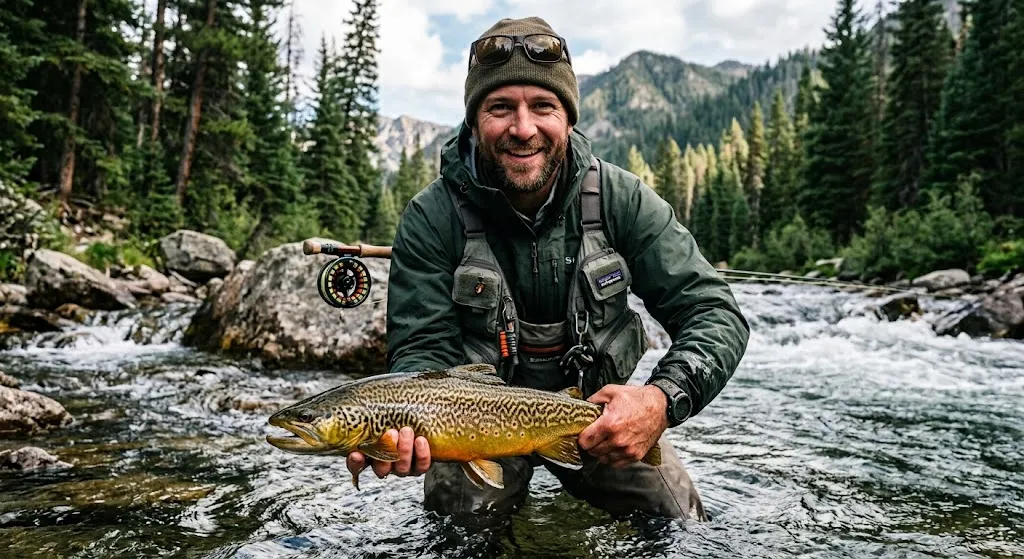
Written by Cameron Spanos
Both of Utah's tiger trout records came out of the same water. Jake Trane's catch-and-keep record, a 19 pound 2 ounce fish that taped 37.5 inches, came from Scofield Reservoir in 2013. Ten years later, Kaleb Nelson pulled the 32 inch catch-and-release record through the Scofield ice on December 9, 2023. So if you're asking where to catch tiger trout in Utah, Scofield is the headline. It's just nowhere close to the whole story.
When the Utah Division of Wildlife Resources gets this question, the answer that usually comes back is a short list: Currant Creek, Navajo Lake, Paragonah. Good picks, incomplete list. Stocking records and DWR regional reports put tigers in at least thirteen waters across the state, from the Uinta high country down to Cedar Mountain, and some of the least famous ones fish the best.
Here's the full map, tiered by how far each water is worth driving.
What is a tiger trout?
A tiger trout is a sterile hybrid: a female brown trout crossed with a male brook trout. The name comes from the markings. Instead of spots, tigers wear a wormy, maze-like pattern (biologists call it vermiculation) over a gold and olive body, and no two fish look quite alike.
Utah's DWR raises them in hatcheries and stocks them for two reasons. First, they can't reproduce, so biologists can put them anywhere without worrying they'll take over a drainage or hybridize with native Bonneville and Colorado River cutthroat. Second, they're violent. Tigers switch to a fish-heavy diet faster than most stocked trout, which is why the DWR leans on them as a control tool wherever Utah chub and other rough fish have boomed. A tiger parked over an endless buffet of three inch chubs spends zero energy on spawning. It just eats and grows.
That's the whole appeal in one sentence: a fish with a brown trout's appetite, a brook trout's aggression, and nothing better to do.
The destination tier: waters worth planning a trip around
Scofield Reservoir
Scofield sits around 7,600 feet in the mountains above Price, roughly two hours from Salt Lake City, and it holds both state records for the species. The engine behind those fish is an enormous Utah chub population that the DWR has spent years fighting by stocking predators, tigers and cutthroat chief among them. When the chub cycle is up, Scofield tigers put on weight at a rate that's hard to believe until you see the shoulders on a 24 inch fish.
It's a moody fishery, though. Some seasons the gill nets and the anglers both find fewer tigers than the reputation promises, and you'll work for bites between the big ones. Fish it anyway. Late ice gets the most attention for good reason, since both record fish came in winter or early season, and the weeks right after ice-off, when tigers prowl the mudlines near the state park shorelines, are the best shore window of the year. Special harvest rules apply here; they're covered in the last section below.
Panguitch Lake
The best all-around tiger trout water in Utah right now. The DWR has stocked Panguitch with tiger trout and cutthroat since 2006, and its own regional reports describe the tigers as abundant and healthy. That matches what you'll hear from the ice crowd, who treat Panguitch as one of the state's premier hardwater trips every winter.
You might also enjoy: Trico Spinner Falls in July: The 7 AM Window Every Tailwater Angler Should Plan Around
It's a big, high elevation lake in Garfield County southwest of the town of Panguitch, with easy access, campgrounds, cabins, and enough water to escape a crowd. Expect numbers of mid-teens fish and honest chances at something over 20 inches. If you can only fish one water on this list next season, this is the one.
Currant Creek Reservoir
Currant Creek is the DWR's poster child for big-tiger odds, about 30 minutes northeast of Strawberry Reservoir up a decent gravel road. It's a mid-size mountain reservoir just under 7,700 feet holding cutthroat, rainbows, and tigers that reach the 5 pound class. The fall bite earns special mention: as the water cools through September and October, tigers slide onto shallow points and hammer streamers and spoons that couldn't buy a follow in August.
Solid bets around the state
Navajo Lake
Navajo sits above 9,000 feet on Cedar Mountain, about 40 minutes from Cedar City, and it might be the prettiest water on this list. It's shallow, roughly 25 feet at its deepest, and that cuts both ways: fish live near the weeds and feed hard all summer, but severe winters can thin the lake through winterkill. The DWR restocks aggressively, and Navajo doubles as one of Utah's best splake fisheries, so a good day here often ends with two hybrid species on the same spoon.
Paragonah Reservoir (Red Creek)
A small, out-of-the-way impoundment roughly halfway between Paragonah and Panguitch that the DWR has repeatedly named among the state's best bets for a big tiger. Small water means the fish are findable. It also means the bite windows are short, so fish it early, fish it late, and don't expect company.
Huntington Reservoir
Up on the Wasatch Plateau along the Skyline Drive corridor, Huntington Reservoir (don't confuse it with Huntington North down in the valley) has been a named tiger destination for two decades. Elevation keeps the water cold all summer, the fish cruise the banks, and the season is short. Worth it.
Duck Fork Reservoir
Duck Fork, east of Ferron in the Manti-La Sal high country, shows up in DWR southeastern region reports with regular tiger plants, including 1,500 tigers in a single late-summer stocking. The road in is rough and slow. That filter keeps pressure down and lets fish age, which is exactly what you want in a tiger water.
Birch Creek Reservoir
Just west of Woodruff off Highway 39 in Rich County, Birch Creek is a small no-motor reservoir holding cutthroat and tigers. It's tailor-made for a float tube and a sinking line. Strip a leech or a damsel nymph along the weed edges and hang on, because a 17 inch tiger in 55 degree water doesn't negotiate.
Causey Reservoir
Causey, up the South Fork of the Ogden River past Huntsville, is steep, deep, and clear, with kokanee, browns, rainbows, and tiger trout sharing the water. There's almost no bank to speak of, so bring a kayak or paddleboard. That clarity makes fish spooky under midsummer sun; natural colors, longer leaders, and low light are the difference between a slow day and a great one.
Wildcards and small waters
These don't headline a trip on their own, but they're all verified tiger water and any of them can save a weekend.
You might also enjoy: Mousing at Night for Big Brown Trout in Summer
- Electric Lake: the upper end of Huntington Canyon, a longtime name on Utah tiger trout lists, cold and high with a mixed trout bag.
- Otter Creek Reservoir: better known for rainbows, but state park fishing information lists browns, cutthroat, and tigers too, and the fertile water grows everything fast.
- Spirit Lake: high in the Uintas near the Wyoming line. The lodge there reports tigers as the most common catch, stocked each June at around 10 to 12 inches.
- Lake Canyon Lake: a small Duchesne County lake where state tourism fishing pages call out fast-growing tigers.
How to catch tiger trout in Utah
Think predator, not stocker rainbow. On most of these waters the tigers you care about eat fish, so the fastest route to a good one is a minnow profile moved with confidence: a jointed Rapala, a Kastmaster or Krocodile spoon, a 3 to 4 inch swimbait on a jighead, or a streamer (woolly bugger, sculpin, mini leech rig) on a sinking line.
Cold water is your friend. The best windows on almost every water above are late ice, the month after ice-off, and the fall cooldown, when tigers hunt shallow flats and weed edges you can reach from shore or a tube. Midsummer pushes fish deep on the lower reservoirs, so either go high (Huntington, Spirit Lake, Navajo) or fish first light.
Nightcrawlers still catch plenty of tigers where bait is allowed, but read the water-specific rules before you soak anything, because several tiger fisheries carry artificial-only or slot regulations that a bait rig can violate.
Whatever you throw, track it. Tiger bites cluster hard around season and water temperature, and one year of logged catches will show you your own ice-off and fall windows better than any article can; you can try Bushwhack to see what that looks like with real data.
What's the biggest tiger trout ever caught in Utah?
The catch-and-keep state record is Jake Trane's 19 pound 2 ounce, 37.5 inch tiger from Scofield Reservoir in 2013. The catch-and-release record, which Utah tracks by length, is Kaleb Nelson's 32 incher, also from Scofield, iced on December 9, 2023 and certified in early 2024. Both stand on the DWR's official record fish list, and the fact that both are Scofield fish is no coincidence. That chub-fueled growth engine is real.
Are tiger trout stocked every year?
On the major waters, yes. Tigers can't spawn, so every fishery on this list exists only as long as the hatchery trucks keep coming, and the DWR publishes exactly where they go. Search any water by name in the DWR fish stocking report to see species, counts, and dates for recent plants. It's the single best scouting tool for this species, because a lake that took fingerling tigers three years ago is a lake holding 16 inch tigers today.
Can you keep tiger trout in Utah?
Usually, but the limit depends on the water. Plenty of tiger lakes run under the standard statewide trout limit, while the flagship fisheries carry special rules. Scofield is the classic example: a four trout limit where no more than two may be cutthroat or tigers under 15 inches, only one may be over 22 inches, and everything from 15 to 22 inches goes straight back in the water. Check the current Utah rules for specific waters before you keep anything, since these slots shift as management goals change.
Thirteen waters is a lot of map. Start at Panguitch for numbers, graduate to Scofield when you're ready to grind for the fish of your life, and log everything in between with Bushwhack so the pattern is yours instead of a guess. The tigers won't meet you halfway, and honestly, that's the fun of it.
Get fishing tips in your inbox
New guides, seasonal tactics, and gear picks — about once a month, no spam.