Strawberry Reservoir Ice Fishing: First Ice, Depths, and the Slot Limit Anglers Blow
 Cameron Spanos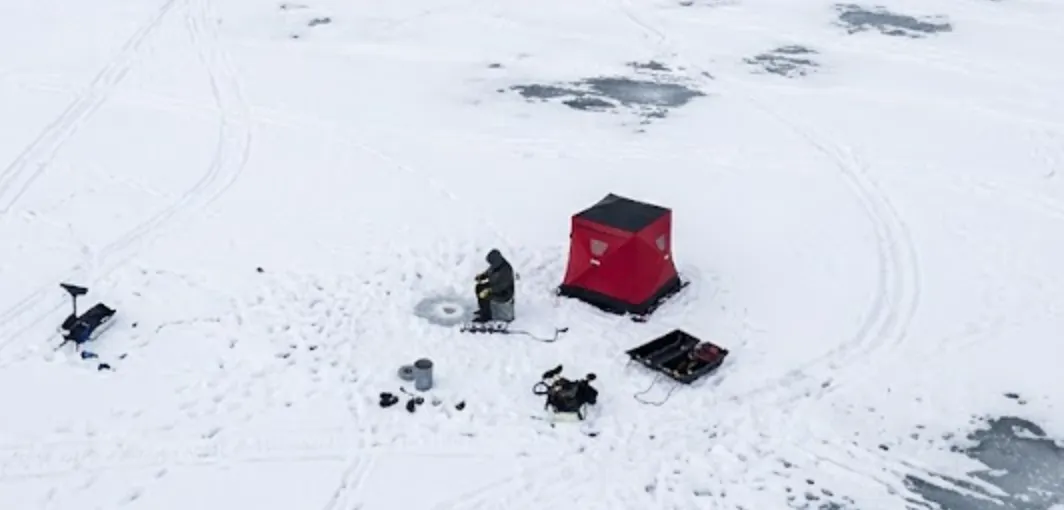
Written by Cameron Spanos
Plenty of people planning a Strawberry Reservoir ice fishing trip show up rigged for a perch bite that isn't there. Strawberry holds Bear Lake strain Bonneville cutthroat, sterile rainbows, kokanee salmon, crayfish, and a mountain of Utah chub. No yellow perch. If you want a bucket of perch fillets you want a different lake, and if you want a 24-inch cutthroat through an 8-inch hole, you're standing on the right reservoir.
That one mix-up ruins more trips here than bad ice does. Anglers bring tiny tungsten and 2-pound line, park on 8 feet of water all day, and wonder why nothing but a chub eats.
When does Strawberry Reservoir ice fishing actually start?
The bays go first. Ice typically begins forming in the shallow arms in early to mid December, with Mud Creek Bay and the small protected bays over on the Soldier Creek arm usually the first to lock up. Those shallow pockets and the deep open water of the Soldier Creek side are two different animals: the bays can be hard while the main Soldier Creek basin, the biggest and deepest water in the reservoir, sits wide open for weeks longer. The main body caps somewhere around the turn of the new year in a typical winter.
In an average year anglers are usually walking out on bay ice by late December, reports run 6 to 8 inches across much of the reservoir through mid-January, and a foot or more by February. In a warm, windy December that whole timeline slides two or three weeks right.
Here is the part I won't soften: no date on a calendar is safe ice. Four inches of new, clear ice is the common minimum for walking, but Strawberry sits near 7,600 feet with serious wind exposure, and a single warm storm can leave pressure ridges and soft seams in water that measured fine the week before. Drill as you walk out. Carry picks, carry a rope, and fish the first two weeks of the season with somebody else on the ice. Read the current Utah DWR conditions reports and local shop reports the morning you leave rather than trusting last weekend's photos.
Early ice is also the best ice. Fish are shallow, aggressive, and have not yet been drilled over by three thousand anglers.
Forget perch. Here's the depth progression that actually happens
Strawberry's forage base is Utah chub, and the cutthroat are in the reservoir largely to eat them. The DWR stocks Bonneville cutthroat here as a chub predator, which is also why the slot limit exists (more on that below). Chub location drives trout location all winter, and chub pull steadily deeper as the ice thickens and the light under it drops.
First ice: 6 to 15 feet, weed edges, short windows
The first week or two of safe ice is the shallowest bite of the entire season. Work the green weed edges in the bays in 6 to 15 feet. Cutthroat cruise these flats hunting chub fry, and they move fast, so a hole that's dead for twenty minutes can go off without warning. Drill ten holes before you fish any of them. This is the window where a loud presentation (a 1/8 oz jigging spoon, a rattle bait, a tube with a big profile) outfishes finesse by a wide margin.
Mid-January: the 20 to 30 foot rainbow zone
Once a foot of snow is on the ice and the weeds have died back, rainbows stack in that classic 20 to 30 foot band over basin and flat transitions. They suspend. You'll mark them at 18 feet over 28 feet of water, and the single biggest mistake is dropping straight to bottom and leaving your bait there. Fish the mark, not the floor.
Late January into February: 25 to 40 feet for cutthroat
Deep winter cutthroat hold near bottom in roughly 25 to 40 feet, usually within a foot or two of the mud. This is where the big chub-eaters live. Larger baits, slower cadence, long pauses. A 20-plus-inch Strawberry cutt will follow a jig halfway up the water column and then refuse it the second you start chasing it with the rod tip, so when a fish rises to you, stop moving.
Don't ignore the shallow bite entirely in February. On overcast afternoons the first-ice pattern comes partly back, and the bays in 10 to 14 feet will hold cruisers again. That's also the pattern most people recognize from fishing first ice panfish elsewhere, except the fish eating your jig here weighs four pounds.
You might also enjoy: Which Flies Catch the Most Trout? 514 Fish From 193 Logged Fly Fishing Trips
What's the slot limit at Strawberry Reservoir?
This is the regulation anglers get wrong most often, and it's a citation waiting to happen. Per the Utah Fishing Guidebook, Strawberry Reservoir runs a limit of 4 trout or kokanee salmon combined. Within that four: no more than 2 may be cutthroat trout under 15 inches, no more than 1 may be a cutthroat trout over 22 inches, and all cutthroat trout from 15 to 22 inches must be immediately released. You can read the current wording on the state's rules for specific waters page.
Three things people blow:
- They count the slot as a trout limit instead of a cutthroat rule. Rainbows and kokanee have no slot here. The 15 to 22 inch protection is on cutthroat.
- They keep two cutthroat over 22 inches. That's one fish, not two.
- They measure a fish after it's been in a bucket. Measure on the ice, decide fast, and get a borderline fish back down the hole.
The slot isn't arbitrary. Cutthroat in the 15 to 22 inch range are the ones transitioning onto a chub diet, and protecting that size class is what keeps chub numbers in check and the whole fishery from collapsing the way it did historically. Taking the middle out would cost you the 24-inch fish three winters from now.
There's a second Strawberry-specific rule that catches people on the ice: you may not fillet trout and salmon, or remove their heads or tails, while in the field or in transit. The guidebook applies that restriction to Strawberry along with Scofield Reservoir, Lost Creek, and Panguitch Lake. It exists so an officer can actually measure what's in your sled, which is the entire point of having a slot. Clean your fish at home.
The kokanee rule that confuses everybody
Utah closed kokanee harvest statewide from September 10 through November 30 to protect spawning fish. The DWR's own guidance is blunt about it: anglers may not possess kokanee from any waterbody in the state during that window. Some tributaries carry additional and earlier closures on top of that, and several Strawberry tributaries are closed to fishing entirely, so check the guidebook before you walk up any inlet.
What trips up ice anglers is the back half of that date range. By the time there's safe ice, the statewide closure has already lifted, so a kokanee you catch in January is legal to keep. But it counts against the same 4-fish trout and kokanee total, not as a bonus. Two rainbows and two kokanee is a limit. Two rainbows, two kokanee, and a cutthroat is a ticket.
Post-spawn kokanee in winter aren't much of a table fish anyway. I'd put them all back and spend the limit on rainbows.
Which access points plow out?
This is the logistics question that decides your trip, and the honest answer for the last couple of seasons is: fewer than you'd think, and don't assume last year's answer still holds.
Strawberry Bay is the access that has historically been cleared. West Strawberry Road (Forest Road 131) is the way in, and the Phillips family at Strawberry Bay Lodge has plowed it in partnership with the Forest Service since 1994.
That arrangement is now in dispute. After Wasatch County took the road over from the Forest Service, the DWR alerted anglers in January 2026 that the road might not be plowed at all, because the county's permit terms didn't carry the liability or financial backing the operator said he needed. The Park Record covered the standoff in detail, and it has not been settled for future winters. What that means for you: confirm the road is being plowed this season before you load the truck.
When it is open, it's also where the crowds are. Expect a parking lot, hole-hopping neighbors, and the first 300 yards off the ramp drilled into Swiss cheese by mid-January.
You might also enjoy: The Utah Cutthroat Slam: All Four Subspecies and How to Catch Them
Soldier Creek gets intermittent treatment. In some winters one lane of the access road and one lane of the ramp are plowed, in others the drifts win. It's the better bet for water that hasn't been pounded, and it's also the side whose main basin freezes last, so it carries a double risk early.
Renegade, Haws Point, and the dam are not winter-maintained. People do reach Haws Point and Renegade with 4WD on icy packed road in a light snow year, and in a heavy one the drifts shut them down for months. Treat them as bonus access, never as the plan.
US-40 over Daniels Canyon is plowed but gets snowpacked and slick during storms, and it's a long tow bill from the top. Check UDOT road conditions before you leave the valley, especially if you're towing a sled trailer.
One more practical note: when West Strawberry Road is open, Strawberry Bay is the default for anglers hauling a flip-over shelter by hand, while the Soldier Creek side rewards a snowmobile or a long walk. If you're fishing Strawberry regularly, start logging which access you used, the snow situation, and what you caught. Two winters of that in your fishing log tells you more about this reservoir than any report will.
Two poles is the law here, not a preference
Utah's general rule, set in Administrative Rule R657-13-7, is up to two poles on any water open to fishing. There's an ice-fishing exception that allows up to six lines, and it applies at exactly four waters: Flaming Gorge Reservoir, Pelican Lake, Causey Reservoir, and Porcupine Reservoir. Strawberry is not one of them. If you've watched somebody run a six-pack of tip-ups on a Utah lake and assumed the rule travels, it doesn't travel here.
Which suits me fine, because two is what I'd fish anyway. A spread you can't watch is a spread you can't jig, and most of the bite at Strawberry comes from an active rod. One jigging rod in your hand and one dead-stick with a small jig hanging two feet under it will put more cutthroat on the ice than six holes you're jogging between. Use the second line as your depth experiment: set it ten feet above the fish you're marking and let it tell you whether they're looking up.
What to bring that Strawberry specifically rewards
Line heavier than you'd expect. Six-pound fluorocarbon is a reasonable floor for cutthroat here, and the people losing fish at the hole are almost always the ones who brought a panfish setup. These are thick, long fish coming up through a hole they do not want to fit in.
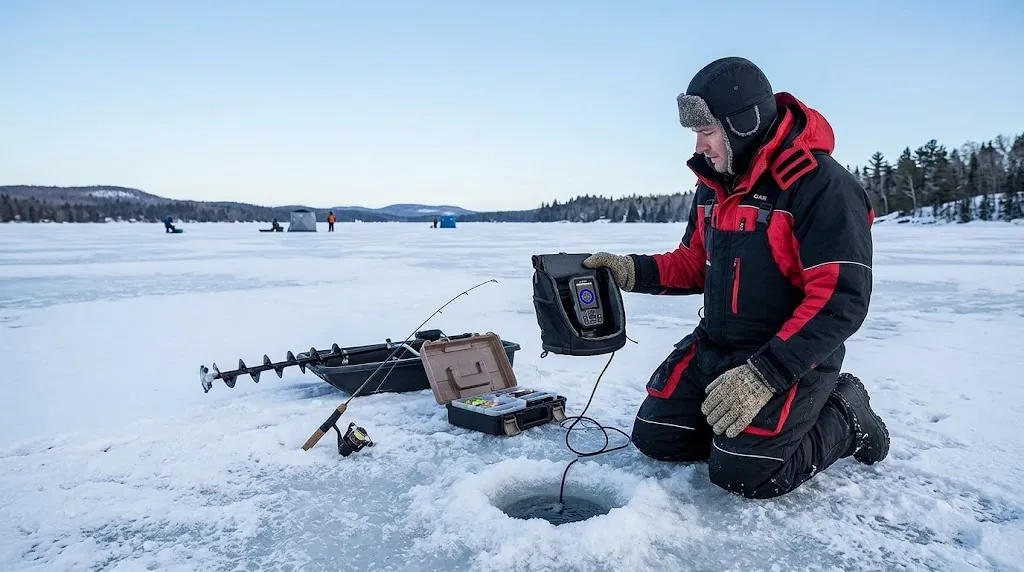
Jigging spoons in the 1/8 to 1/4 oz range in chub-matching colors (white, silver, perch-pattern works despite the lake having no perch), tubes, and a couple of larger profile baits for the February bottom bite. A flasher matters here more than on a shallow lake because so much of the bite is suspended fish you'd never otherwise know about. If you're deciding between upgrading your auger and upgrading your electronics, buy the electronics first for this reservoir.
And bring a tape measure you can read with gloves on. The slot limit is enforced, Strawberry gets patrolled, and "I eyeballed it" isn't a defense.
If the ice isn't in yet, the shore fishing on Strawberry Reservoir in late fall is worth the drive, and Scofield usually locks up on a similar schedule with less pressure if the lot at Strawberry Bay looks like a tailgate. Log the conditions either way. Bushwhack exists because a winter of your own notes beats a stranger's report every time.
Get fishing tips in your inbox
New guides, seasonal tactics, and gear picks — about once a month, no spam.