First Ice Panfish: The Two-Week Window That Outfishes the Rest of Winter
 Hudson Reed
Written by Hudson Reed
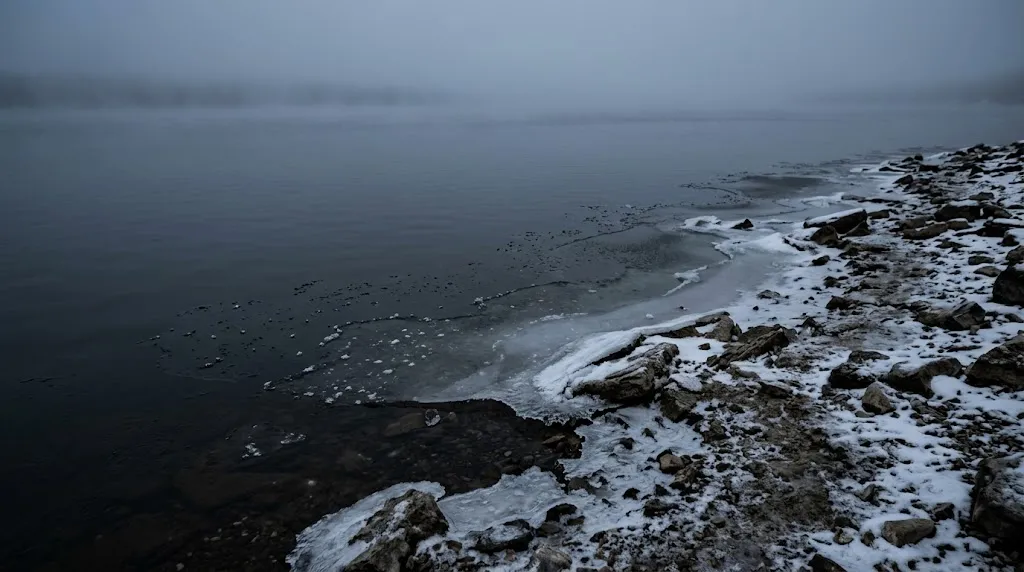
The best panfish bite of the year isn't in June, and it isn't from a heated wheelhouse in January (one of those towable ice houses you fish inside of with the furnace running). It's the first couple of weeks of walkable ice, when first ice panfish are still in the shallow green weeds they used in late fall and nobody has drilled a hole over them in months. Then it closes. Snow piles up, the weeds brown out, oxygen slides, the fish drift toward the basin, and December's easy bull bluegills turn into February's picky ones.
Call it two weeks and treat the number as a rough shape. A hard, still, snowless freeze can stretch it past three. One that comes in warm and wet, or gets buried under early snow, can shut it down inside of a week and a half.
I'd still take one safe morning in that window over five weekends in mid-January.
But the window has a price, and it isn't gear. Early ice is the most dangerous ice of the season, and nothing you read here, or in a forecast, or in a bait shop report can tell you the ice in front of you is safe. So safety goes first, before a word about jigs.
No ice is safe ice, and early ice is the worst of it
Wisconsin's DNR takes up the question of how much ice is enough on its ice safety page and answers it like this: "There really is no sure answer, and no such thing as 100 percent safe ice." Minnesota's DNR is just as direct about who carries the risk. "The DNR does not measure ice thickness on Minnesota lakes. Your safety is your responsibility."
Early ice is its own category of hazard because thickness varies wildly across water that looks identical. The Minnesota DNR's thickness guidelines put it this way: "Ice is seldom the same thickness over a single body of water; it can be two feet thick in one place and one inch thick a few yards away." That variation happens inside a single shallow bay, exactly the water this post sends you toward.
Here's the hazard checklist I run before an early-ice trip. Two items come straight from Wisconsin's guidance and I've marked them. The rest is my own list.
- Inlets, outlets, and narrows. Wisconsin's DNR says to avoid these where current may thin the ice, and the surface above that current looks no different.
- Ice type. Wisconsin's DNR also says to look for clear ice, "which is generally stronger than ice with snow on it or bubbles in it." My own extension, not the agency's: I treat refrozen slush and layered ice as suspect too, since neither froze as one clean sheet.
- Springs. Groundwater feeding the lake keeps working under the cover, and it doesn't care what the air did last night.
- Pressure ridges and heaves. Wind and temperature swings buckle sheets against each other, and the crack or open water can sit right beside ice that held you ten feet back.
- Aerators. Some lakes run them all winter, including small private units off a landowner's dock, and they open water no map shows.
- Snow cover. It hides everything above, and it insulates the ice beneath so that sheet forms slower and stays weaker than bare ice through the same cold snap.
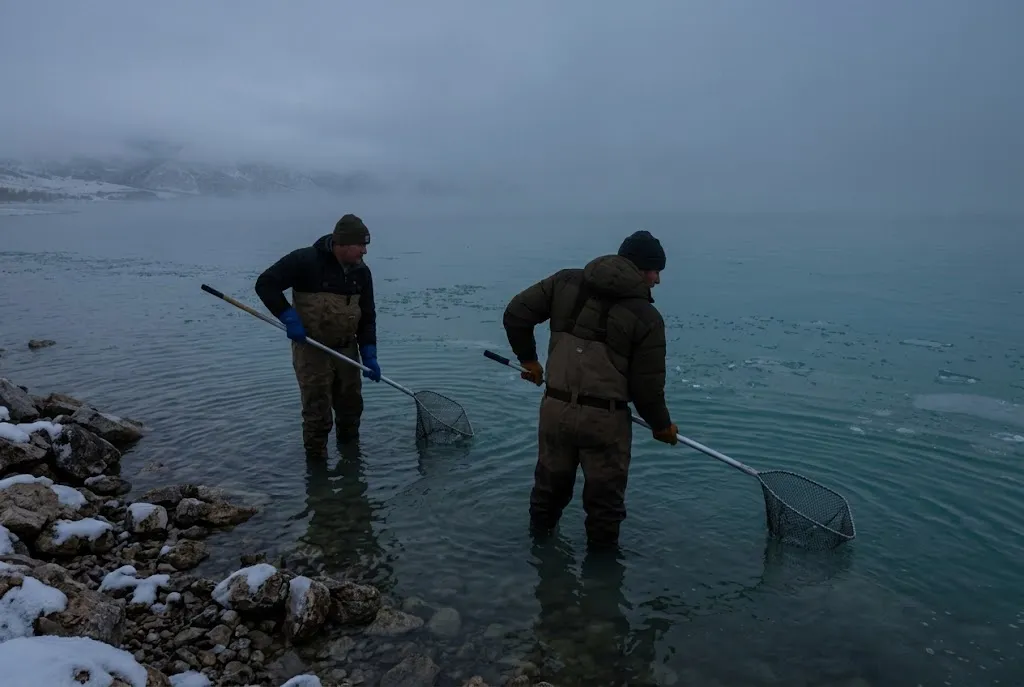
Which means you measure your way out, every trip. A spud bar goes ahead of you from shore: that's a long steel chisel on a handle, jabbed into the ice in front of your boot as you walk, so the bar finds the soft spot instead of your leg. A tape or marked auger checks thickness at the first hole and again as you push out. Ice picks, the handled spikes you claw yourself back out with, ride on a cord around your neck, not in the sled where they're useless. Throw rope in the sled. Fish with somebody, and tell a third person the lake and the bay. Wisconsin's DNR points anglers to local bait shops, fishing clubs, and resorts, which it says often have the most up-to-date information on local ice. That's the best intel you'll get, and it's still a starting point, not a clearance.
And do not try to read the ice from the bank. Wisconsin's DNR is unambiguous on that: "You cannot judge the strength of ice by one factor like its appearance, age, thickness, temperature or whether the ice is covered with snow." Anglers call new, clear, dark-looking ice black ice, which is the same stuff Minnesota's table means by "new, clear ice." What that table calls white ice is the cloudy, snow-fed layer freezing on top of it. Same sheet, and neither word tells you from fifty yards whether it holds you.
How thick does the ice need to be for ice fishing?
The Minnesota DNR lists 4 inches for ice fishing or activities on foot, and says to stay off ice under 4 inches. Those figures apply to new, clear ice only, and the agency says to double them when traveling on white ice. So 4 inches of clear ice for a person on foot, 8 inches if that ice is snow-covered or cloudy.
The same table for vehicles:
- Snowmobile or small ATV: 5 to 7 inches
- Side-by-side ATV: 7 to 8 inches
- Small car or SUV: 9 to 10 inches
- Medium SUV or small truck: 11 to 12 inches
- Medium truck: 13 inches
- Heavy-duty truck: 16 to 17 inches
- Heavy-duty truck with wheelhouse shelter: 20 inches or more
Those are the published figures. Don't average them against a number off a forum, and don't invent one for an activity the agency doesn't list. Four inches is a floor, not a goal: my own preference is to read well past that minimum before walking a shallow bay, because a weedy bay holds the exact features that thin ice.
You might also enjoy: Best Fishing Rain Jacket Under $100: 3 Picks and 1 to Skip
Why the first two weeks outfish the rest of winter
Three things line up at first ice, then come apart one at a time.
Location carries over from fall. Nothing has forced these fish to relocate yet, so they're near where they finished the open-water season, and all that late-season recon is still good. If you were paying attention to where crappie go in the fall, or fishing the same brush piles that held crappie after the spawn, you already have your first-ice waypoints.
The weeds are still alive. Clear, snow-free ice lets light through, so submerged vegetation keeps photosynthesizing, which means invertebrates to eat and oxygen right where the fish are. By midwinter, snow cuts the light, the shallow weeds die back, and decomposition drives shallow oxygen down. That's the mechanical reason the shallow pattern fades and the basin pattern takes over, and first ice is the front half of that shallow, deep, shallow progression.
Nobody has bothered them. These fish haven't seen a jig, a hole, or a shadow since the lake was open. Aggression at first ice is partly biology and partly the fact that you're the first person to ask.
Where first ice panfish sit: 4 to 12 feet of green weed
Shallow, weedy bays on small lakes. Not the basin.
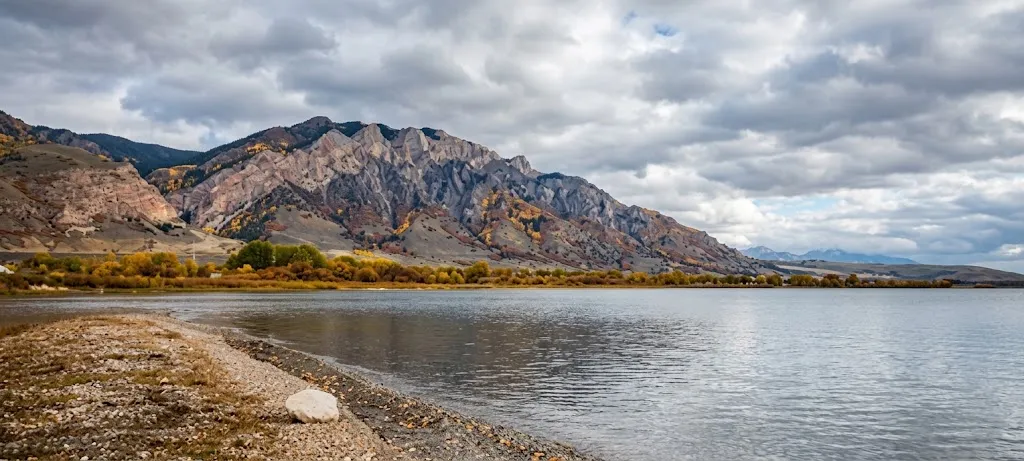
Small, shallow, wind-protected water locks up first, which is why it fishes first and also why it's the water you'll be tempted onto early. Inside those bays the target is green weed: cabbage and coontail are worth hunting, with hard-stem bulrush as a backup. Writing in Outdoor News in November 2025, columnist Glen Schmitt put early-ice panfish in weeds shallower than 10 feet, with 10 to 15 as the next move once the shallow bite thins. My working band is 4 to 12 feet, Schmitt's shallow number stretched at both ends to cover where the weed line actually sits. Clear lakes push that line deeper. Stained lakes pull it shallower, and on a really dark lake I'd fish 4 to 7 feet and nothing else.
Inside that band the fish aren't spread evenly. They stack on edges: the outside weed line where vegetation quits and clean bottom starts, inside turns, points of growth poking into open bottom, and lanes inside an otherwise solid bed. Get one bay figured out and you can catch fish from a 30-foot circle all morning. Minnesota's DNR keeps short primers on ice fishing for bluegill and crappie worth reading first.
A first-ice morning in a shallow bay, in order:
- Pick your bay at home, using summer satellite imagery to find the weed beds and a lake map to mark every inlet, outlet, narrows, and known spring, so you know where not to walk.
- Walk that route with the spud bar tapping ahead of you, drilling and measuring at the first hole and again as you push out, treating every reading as local to that spot.
- Punch six to ten holes running from about 4 feet out through the weed edge to about 12, spaced far enough apart to sample different depths rather than the same one twice.
- Leave the shallow holes alone for twenty or thirty minutes, because fish in five feet of clear water under new ice heard your auger and need time to settle.
- Work back deepest to shallowest, about five minutes a hole, writing down which depth and weed type produced so the next cold snap isn't a guessing game.
That depth-by-depth note is the difference between one good first ice and a repeatable one. You can try Bushwhack to see a season of them stacked up.
What is the up bite, and why do beginners miss it?
An up bite is a panfish rising to your jig from below and lifting it as it inhales, which puts slack in your line instead of pull. The fish has taken the weight off your rod tip, so your bobber lays over, your spring bobber straightens out, and your line goes soft. Crappie do it constantly because their mouth is built to feed upward, and big bluegill do it too. There's no thump. Nothing tugs.
That's the entire problem. A beginner waiting on a downward tap sits there while fish after fish eats the jig, feels the hook, spits it, and goes home certain the hole was empty.
You might also enjoy: Best Sun Protection Gloves for Fishing (UPF 50+): 2026 Buyer's Guide
Fixing it means seeing instead of feeling. Use a short light or ultralight rod, 24 to 28 inches, with a genuinely soft tip. Add a spring bobber and load it, so the wire sits bent under the jig's weight and has somewhere to go when that weight disappears. Then watch the tip, not your hands, and set on any change: the bend easing off, the line going slack, the smallest lift. You'll set on nothing plenty of times. Cheaper mistake than never setting at all.
Two other things help. Fish light line, 2 or 3 lb, so the jig hangs naturally and slack shows. And when the bite goes soft, drop to a smaller tungsten jig, 3 or 4 mm, instead of adding motion. Tungsten is denser than lead, so the smaller jig still loads the spring bobber.
Skip the deep basin for now
The deep basin crappie school is the most oversold piece of water in December, and I think it costs anglers their best two weeks. The basin pattern is real, and it's how you'll catch crappie in late January when the shallows go dead, but at first ice it's the crowd's default because that's where every midwinter article points. Meanwhile the bays are green, the fish are aggressive, and 8 feet of water is something you can figure out without a flasher, the sonar unit that shows your jig and nearby fish as moving bands on a dial.
It's the easier pattern to learn on, too. Twelve feet of line out is a forgiving classroom. Forty feet, a school suspended at an unknown depth, and a slack-line bite you can't read yet is not.
Vetting first-ice water before you set foot on it
Some waters are worse candidates for early ice no matter how cold it's been. Rivers and river-influenced water, reservoirs being drawn down, anything with a dam release, known spring holes, and lakes running aerators belong at the bottom of the list. Small, shallow, protected natural lakes belong at the top, and they hold panfish anyway.
The rest is fall homework: note which bay froze first last year and how many nights of hard freeze it took. Then ask at the bait shop nearest the lake, not the one nearest your house, which bay is holding and how thick, and treat the answer as a lead rather than a measurement.
None of that homework replaces drilling. It just tells you which lake to drive to.
The kit that actually matters at first ice
You don't need much, and you shouldn't spend it in the order most people do. A hand auger is plenty for the first two weeks, since the ice is thin and you'll move constantly. A short light rod with a spring bobber, tungsten jigs in 3 and 4 mm, 2 lb line, and a tub of waxworms or plastics covers both bluegill and crappie. Starting from nothing, look at mid-priced ice fishing rod and reel combos in that 24 to 28 inch light or ultralight range with a soft tip, because the tip does the work on an up bite.
Here's where I'd argue with most gear lists: with a hundred dollars and no ice gear, the spud bar and picks come before the flasher. In 8 feet of weeds you can find fish by drilling more holes. You cannot find bad ice by hoping.
Fall knowledge transfers almost directly here. The same fish you hunted on deep summer bluegill structure in August moved shallow as the water cooled, and the crappie took the same route. First ice catches them mid-move, in water you can reach.
Log the date your bay locked up this year. Two or three seasons of that and you'll know when your window opens better than any forecast.
Get fishing tips in your inbox
New guides, seasonal tactics, and gear picks — about once a month, no spam.