Deep Summer Bluegill: Finding Big Gills Off the Bank
 Hudson Reed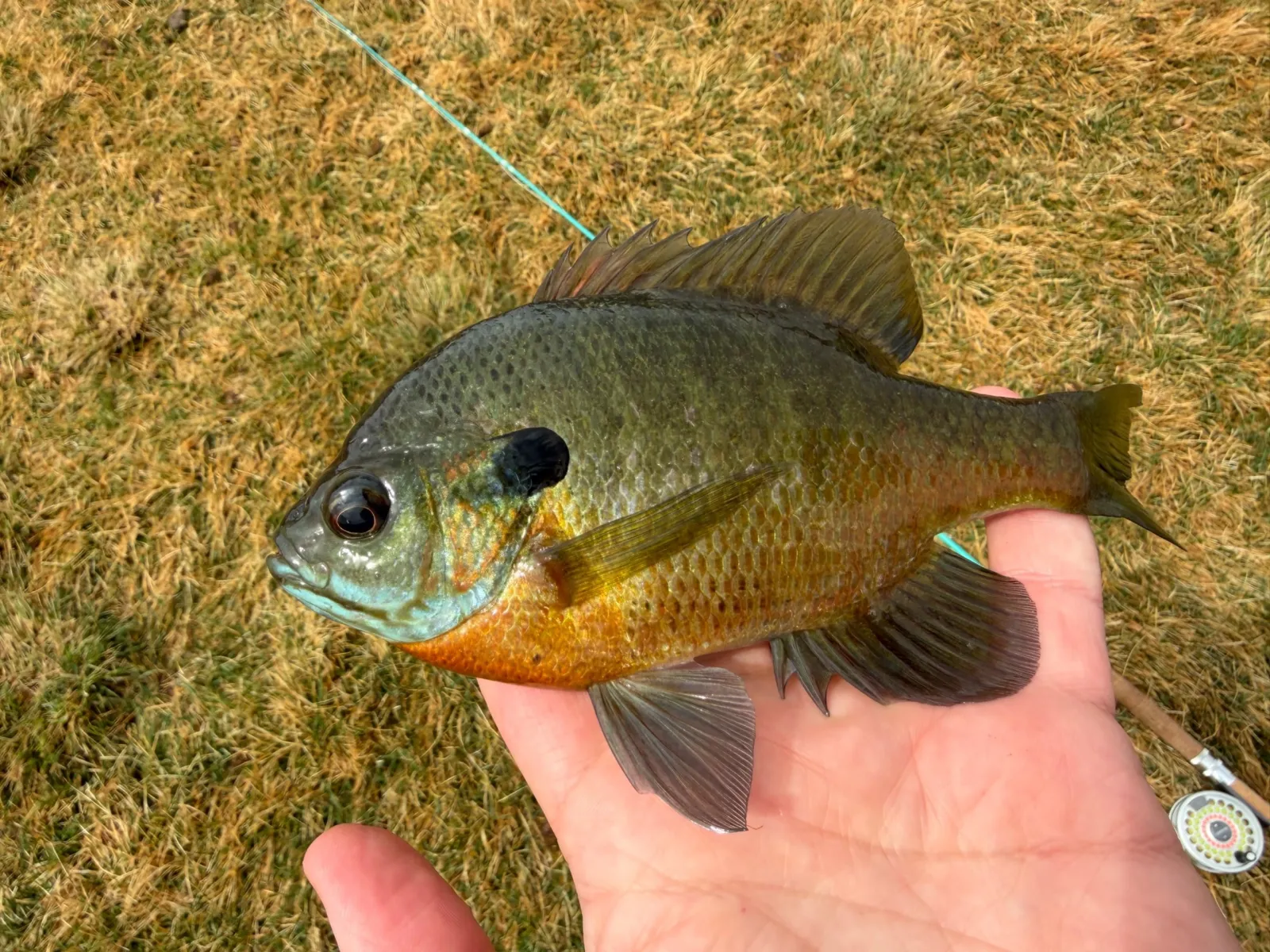
Written by Hudson Reed
Most of the nine-inch bluegill in your lake left the bank weeks ago. The little ones are still hanging around the dock pilings where everybody dunks a worm, and that's exactly why folks think the summer bite dries up. It doesn't. The slabs just moved out to water most bank anglers never bother casting to. Deep summer bluegill are one of the most overlooked patterns in freshwater, and the wild part is you don't need a boat to get in on it.
I'll walk through where the big gills go when July hits, why they go there, and the finesse rig that gets bites when a bobber-and-worm gets ignored.
Why do big bluegill leave the shallows in summer?
Two things push them out: heat and oxygen. By July, surface water in a lot of lakes climbs past 80 degrees, and big bluegill handle that a lot worse than the dinks do. Their comfort zone sits between 65 and 80 degrees, per the Wisconsin DNR's bluegill literature review, and they'd rather ride the cooler edge of that range than bake in the shallows.
Then there's the thermocline. Starting in late May through mid-June, deeper lakes stratify into a warm top layer and a cold bottom layer that don't mix, according to the Iowa DNR. The problem is the bottom layer. With no mixing, nothing replenishes the oxygen down there, and rotting weeds and mud burn through what's left. By midsummer the water below the thermocline runs too low on oxygen for fish to hang around.
So the biggest gills get squeezed. Too hot up top, no air down low. They stack up in a band of water that's both cool enough and still carries oxygen, usually right along the top of that thermocline. Bluegill want a dissolved oxygen level of at least 5 mg/l, though they can tough out water as low as 1 mg/l for a while.
That squeeze is your friend. It concentrates the fish. Instead of scattered singles picking at bugs in two feet of water, you get schools of quality bluegill parked in predictable spots.
How deep are bluegill in summer?
On most lakes, the big ones settle into 8 to 15 feet through July and August, and they'll suspend right above the thermocline where the water hovers around 69 degrees. Depending on clarity, that band usually sits somewhere between 12 and 18 feet down, so the fish are often relating to it rather than sitting on the bottom.
Clarity moves the whole thing. The Iowa DNR notes that a stained, turbid lake can set its thermocline as shallow as 5 feet, while a clear lake pushes it down past 16 feet. That's a huge swing, and it's why there's no single magic number. A muddy prairie pond and a gin-clear reservoir will hold their summer gills at completely different depths.
What matters more than an exact figure: find the deepest green weeds, find the first real drop into the basin, and you've found the ceiling the fish are living against.
You might also enjoy: How to Fish a New Lake: A First-Trip Playbook for Breaking Down Unfamiliar Water
The three deep spots that hold slabs
You're not fishing the whole lake. You're fishing three kinds of structure, and if you learn to spot them from shore or on a contour map, you'll skip a lot of dead water.
Deep weed edges
This is the big one. Bigger bluegill use the outside edge of the weedline as both a pantry and a highway, cruising it to pick off bugs and small forage. As summer wears on and the weeds grow deeper, the fish follow them out. A clean weed edge dropping from say 8 feet into 12 or 14 is about as reliable as deep gill fishing gets. Find where the green cabbage or coontail quits and the open basin starts, and work that seam.
Mid-lake humps
An offshore hump, a spot that tops out shallow and falls away on all sides, can hold some of the biggest bluegill in the lake. The catch is it needs something on it. A bald mud hump gets ignored. A hump with rock, a shell bed, or a sunken tree becomes a magnet. These are harder to reach from the bank, but plenty of lakes have humps that come within a long cast of a point or a causeway.
Isolated brush and hard drops
Anywhere the bank falls straight into deep water gives fish cool water without a long commute, and it's often within reach of a shore angler. Add a sunken brush pile, a laydown, or a rock transition and you've got a spot worth ten casts. Bridge riprap and dam faces are classic shore-friendly versions of this.
Can you reach these fish from the bank?
Yes, and this is the whole point. You don't need a fancy boat and forward-facing sonar to catch deep summer bluegill. You need to fish the right piece of shoreline.
Look for banks that touch deep water fast: points, steep clay or rock shorelines, causeways, bridges, dam riprap, and the outside bends of channels. Skip the long shallow flats and the swim-beach corners where the dinks live. A cheap contour map or a free lake-map app tells you where the deep water pushes closest to a shore you can stand on. That's your starting X.
The trick from the bank is casting out to the deep zone and working your rig back slowly along the bottom contour, or holding it over a spot you know holds brush. Wade fishing helps too. Getting out even ten or fifteen feet off a shallow bank can put your cast right on the edge of the drop.
The 1/16 oz dropshot for deep summer bluegill
Here's my hot take: for suspended summer gills, a light dropshot flat-out beats the classic bobber-and-worm most days. A bobber presents your bait at one fixed depth and you're guessing. A dropshot keeps a small offering hovering a foot or so off the bottom, right in the strike zone of fish that are holding deep, and you can crawl it along the drop until you find them. It's the main tactic for good reason.
You might also enjoy: The Best Time of Day to Fish in Summer (By Species)
The rig is dead simple. A 1/16 ounce weight is plenty for bank distances and 8 to 15 feet of water, and it keeps the presentation subtle. Here's how I tie it:
- Tie a size 6 or 8 hook (a VMC Spin Shot or a plain Aberdeen both work) onto your leader with a Palomar knot, leaving a long tag end hanging down, then run that tag end back through the eye so the hook stands out horizontally.
- Pinch or clip a 1/16 ounce dropshot weight onto the bottom of that tag end, 12 to 24 inches below the hook. Set the shorter distances for fish tight to bottom and the longer ones for fish suspended higher.
- Bait the hook with a small soft plastic like a two-inch straight-tail worm or a tiny grub, or go live with a half nightcrawler, a redworm, or a leech nose-hooked so it wiggles.
- Cast out, let it sink on a semi-slack line until the weight taps down, then reel up the slack and hold it with tiny shakes. Let the bait do the work. Drag it a foot, pause, repeat.
Run 4 to 6 pound braid to a couple feet of 4 pound fluorocarbon leader if you want to feel every tick, or just spool straight 4 pound mono if you're keeping it cheap and simple. Either catches fish. A light or ultralight spinning rod loads better on the hookset with these tiny hooks.
Bites are subtle out deep. A lot of times you won't feel a thump, you'll just feel weight, or the line will swim off sideways. When in doubt, set the hook.
Timing the day out deep
You can catch these fish all day long once you're on them, but the window matters. Chris Larson, a fisheries supervisor with the Iowa DNR, put it plainly:
"Fish tend to be more active early and late in the day during the summer."
Chris Larson, Iowa DNR fisheries supervisor
Low light gets the school feeding and pulls a few up onto the tops of humps and the shallower edge of the weeds, where they're easier to reach. Midday they slide deeper and get pickier, which is exactly when the slow, subtle dropshot earns its keep while a fast-moving bait gets snubbed.
One more thing worth tracking: once you find a productive depth and structure type, the rest of the lake's spots that match it will usually be holding fish too. Bluegill are pattern fish. If you're logging your catches, that's where the payoff shows up over a season. You can try Bushwhack to track your spots and depths and see the deep-summer pattern come together across your home water.
Give the deep stuff a real shot this July. Find a steep bank near a weed edge, tie on a 1/16 ounce dropshot, and cast past where everyone else stops. The slabs are out there. Most people just never look.
Get fishing tips in your inbox
New guides, seasonal tactics, and gear picks — about once a month, no spam.