Best Fillet Knives 2026: Electric vs Manual (Tested Picks)
 Hudson Reed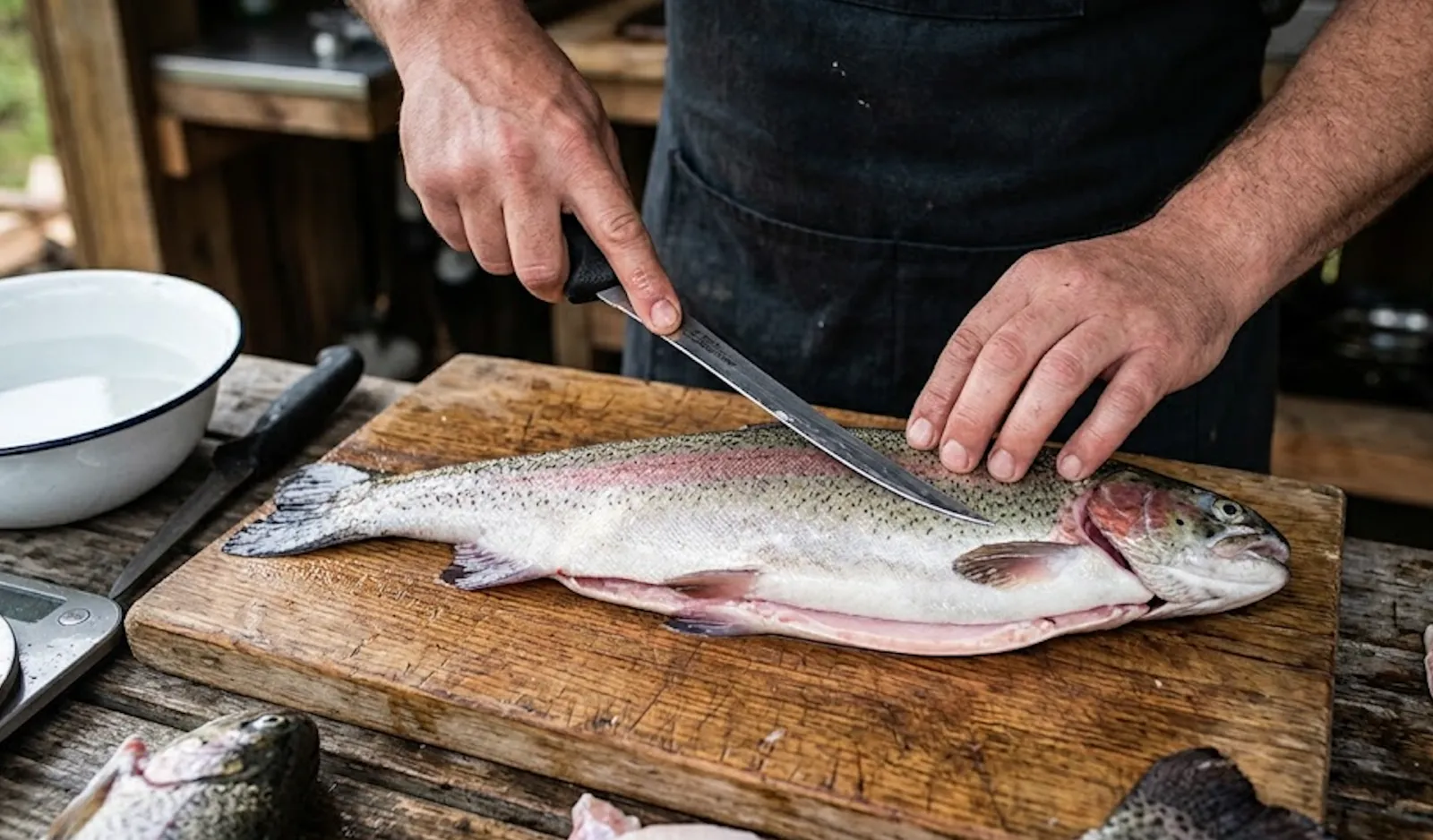
Written by Hudson Reed
A cooler with forty bluegills in it will tell you everything you need to know about the electric-vs-manual debate. I've stood at the cleaning table after a good crappie day with a hand knife and felt my forearm cramp by fish number twenty-five. That's the real divide when you're picking the best fillet knives for 2026: not which blade is sharpest, but how many fish you clean in a sitting. Get that number right and the choice between electric vs manual mostly makes itself.
Here's the short version before the picks. An electric knife earns its keep when you're cleaning piles of small fish. A manual knife wins on big fish, on precision, and on the days you only kept two. Most serious anglers I know own both and reach for whichever fits the cooler in front of them.
And one note up front, because the gear world moves fast: every product below is a current, in-stock listing first available in 2025, verified the day this was written. The famous flagships everyone names in these posts are great knives, but a lot of them are older listings, so I went looking for what's actually new and well-reviewed right now.
Quick picks at a glance
| Knife | Best For | Price | Rating |
|---|---|---|---|
| Protmex 12V Cordless Electric | High-volume panfish days | ~$80 | 4.5 / 5 |
| Alpedge 9" DIN 1.4116 | Walleye, pike, salmon, big fish | ~$19 | 4.5 / 5 |
| SliceElite 7.5" Pakkawood | All-around freshwater work | ~$23 | 4.5 / 5 |
| Calamus SwiftEdge Two-Knife Set | Budget, covering two blade sizes | ~$12 | 4 / 5 |
Is an electric fillet knife worth it?
It's worth it once you're cleaning more than three fish in a session. Below that, the setup and cleanup cost more time than the knife saves.
The math is pretty clean. Anglers who time themselves report roughly 45 to 60 seconds per panfish with an electric knife start to finish, including the skin and rib bones. Fifteen crappie that take you an hour and a half by hand come down to about half an hour with an electric. That's the whole pitch right there. According to discussions on the In-Depth Outdoors angler forums, plenty of walleye and panfish guys switched to electric years ago and never looked back.
But electric isn't free of trade-offs, and the honest reviews say so. Some anglers never get all the belly meat with a reciprocating blade. Others have shredded a fillet learning the tool and gone right back to a hand knife. There's a learning curve, and it's steeper if you weren't already comfortable filleting. One more thing the listicles skip: heat. In multi-knife field tests, testers noticed perceptible warmth in every electric model after about 20 fish, so a big cleaning marathon means a cool-down or a second battery.
My take? If you mostly clean a handful of fish at a time, skip the electric and buy a better manual knife. The electric is a volume tool. It's not a status symbol, and a $200 cordless model cleaning four bluegills is just an expensive way to do what a $20 blade does quietly.
Protmex 12V Cordless Electric Fillet Knife
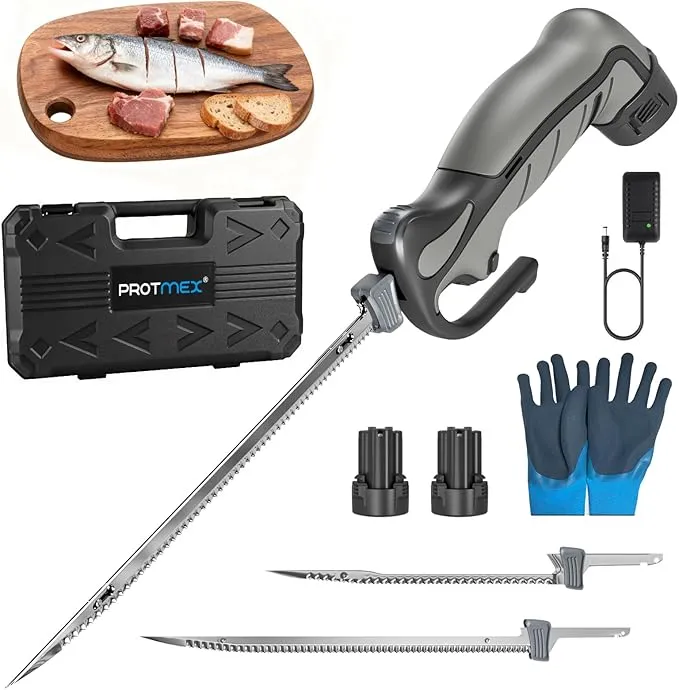
This is the electric pick, and it's the one to grab if your problem is a livewell full of perch, crappie, or bluegill. It runs on a 12V lithium battery, comes with 8-inch and 10-inch blades, and includes a cut-resistant glove and a safety lock. At around $80 it sits well under the premium cordless models without feeling like a toy, which is exactly the bracket most weekend anglers should be shopping in.
Who it's for
Anyone regularly cleaning ten or more fish at a time. Ice-fishing panfish crews, summer crappie hunters, walleye guys with a limit to process. If that's not you, see the manual picks below and save the money.
You might also enjoy: Best Fishing Headlamp Under $50 for Night and Pre-Dawn Fishing (2026)
Pros and cons
- Pro: Cordless, so you can clean fish at the dock, the truck, or a campsite without hunting for an outlet.
- Pro: Two blade lengths cover small panfish and mid-size fish in one kit.
- Pro: Safety lock and included glove, which matters more than people admit with a reciprocating blade.
- Con: Like every electric, it builds heat on long sessions and takes practice to keep the belly meat.
- Con: It's a volume tool. Overkill for two-fish nights.
Currently around $79.99 on Amazon, with a 4.7-star average across nearly 800 ratings.
Alpedge 9-Inch: the big-fish manual
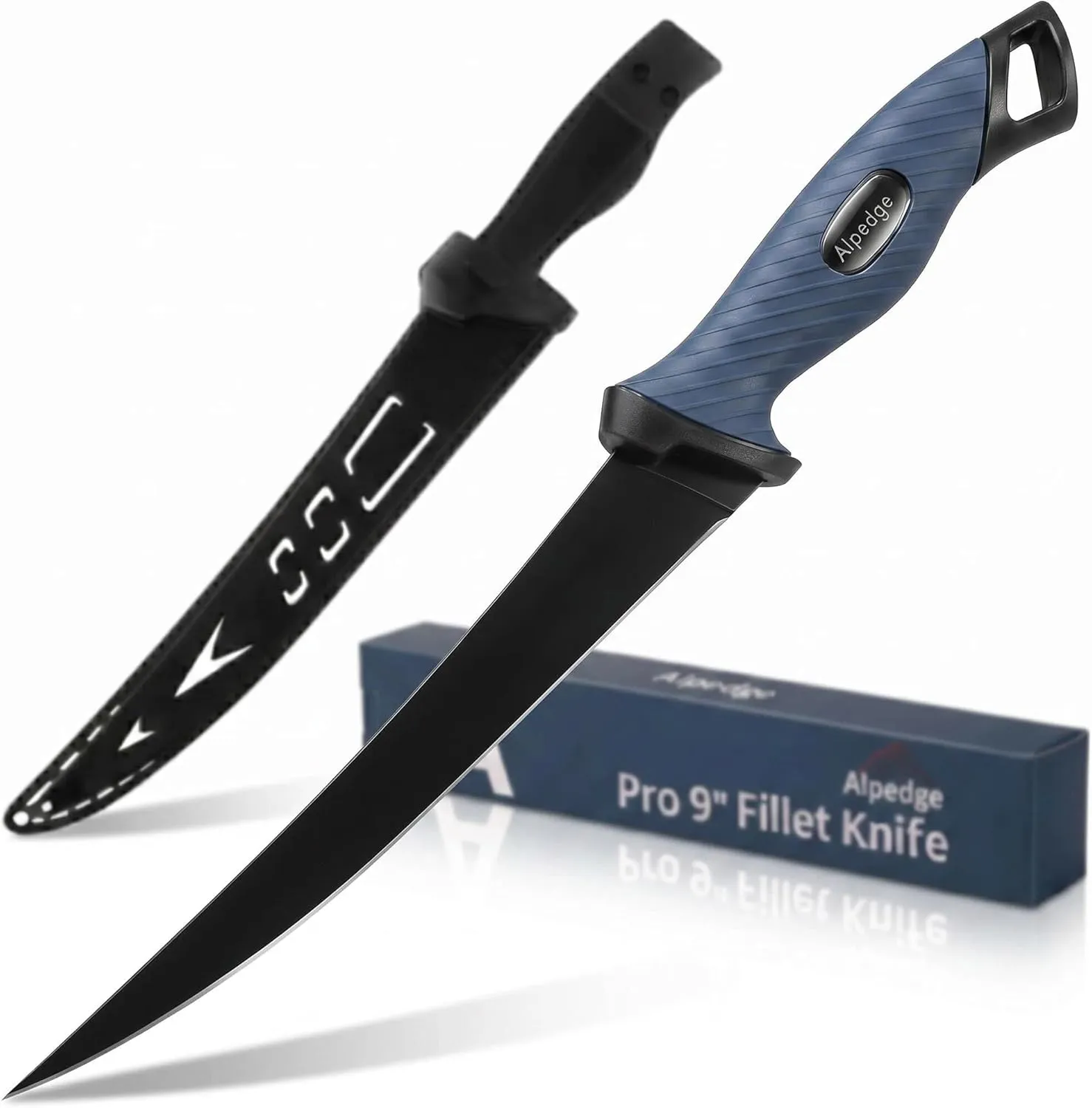
When the fish weighs more than two or three pounds, a fixed blade beats an electric, and this is the one I'd hand a walleye or salmon angler. The 9-inch blade is German DIN 1.4116 stainless, long and flexible enough to ride the backbone of a tall fish in one pass. A two-pound crappie is surprisingly tall through the shoulder, and a long blade clears it cleanly where a stubby panfish knife stalls. It also handles pike, redfish, and lake trout without complaint.
The flex is the whole point. A thin, flexible blade bends with the contour of the ribs, so you lose less meat and leave less work for the skinning pass. Stiff blades fight you on the curve.
Who it's for
Walleye, pike, salmon, big catfish, anyone filleting fish in the two-pound-plus range who wants reach and flex.
Pros and cons
- Pro: Long, flexible blade made for big-bodied fish.
- Pro: Sheath with a belt clip and safety buckle, genuinely handy on a boat.
- Con: Too much blade for tiny bluegills; you'll want something shorter for true panfish work.
About $18.99 on Amazon, 4.5 stars across 900-plus ratings. For the money it's hard to argue with.
SliceElite 7.5-Inch: the do-everything blade
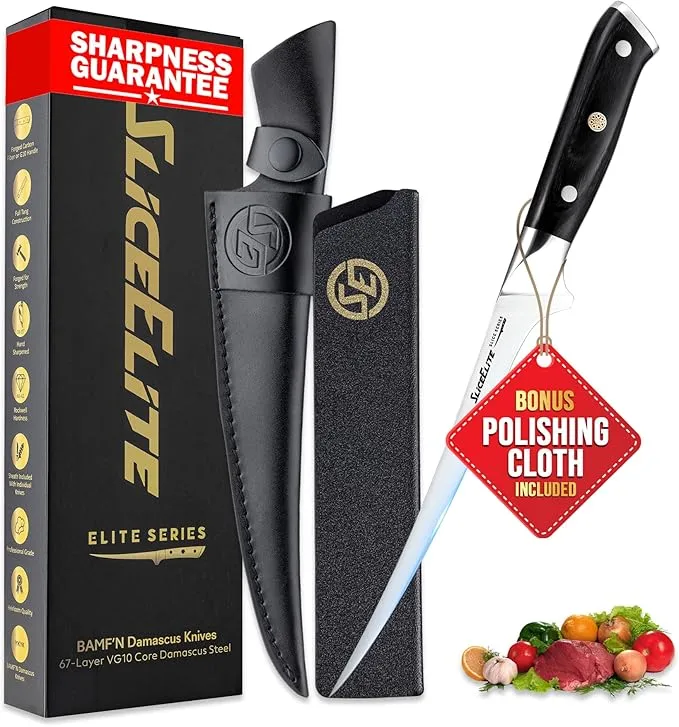
If you buy one manual knife and one only, make it a mid-length one, and the SliceElite 7.5-inch is the most reviewed of the bunch here for a reason. High-carbon German stainless, a Pakkawood handle that doesn't get slick when it's wet, and a 7.5-inch blade that splits the difference between panfish nimbleness and big-fish reach. It's the blade that lives in my truck because it doesn't make me think about which fish are in the cooler.
Who it's for
The angler who fishes a mixed bag: some crappie, the occasional bass, a walleye now and then. One knife, most jobs.
Pros and cons
- Pro: Versatile length, comfortable wet grip, holds an edge well for the price.
- Pro: Over 2,000 ratings at a 4.7 average, which is a lot of real-world feedback.
- Con: A touch stiffer than a dedicated fillet flex blade, so detail skinning on small fish takes a little more care.
Runs about $22.97 on Amazon.
Calamus SwiftEdge Set: best budget option
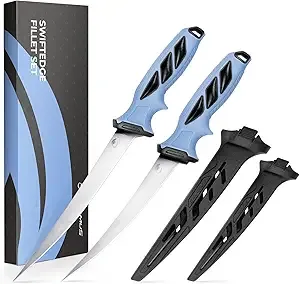
Twelve bucks for two knives. The SwiftEdge set pairs a 7-inch and a 9-inch G4116 German stainless blade, which neatly covers panfish and bigger fish without making you commit to a single length. It's the kit I'd put in a kid's tackle setup or a backup bag, and a smart starter buy if you're not yet sure whether you fillet enough to justify spending more.
You might also enjoy: Pike Fishing for Beginners: The Freshwater Predator Most Anglers Overlook
Who it's for
New filleters, gift-givers, and anyone who wants two sizes covered cheaply.
Pros and cons
- Pro: Two blade lengths for the price of one cheap knife.
- Pro: Flexible curved blades that follow the rib cage.
- Con: Edge retention isn't in the same league as the pricier picks; plan on touching it up more often.
Around $11.99 on Amazon, 4.3 stars over 1,100-plus ratings.
What should you actually look for in a fillet knife?
Three things decide whether a knife is right for your fishing, and price isn't really one of them.
Blade length, matched to your fish. A 5-to-7-inch blade is right for panfish and small bass. Step up to 8 to 12 inches for walleye, pike, and other big-bodied fish. Crappie are the sneaky exception: a two-pounder is tall, so a 9-inch blade clears it better than its weight suggests.
Flex. You want enough flex to ride bone and contour, with enough backbone to push through skin and scales. Too floppy and you can't control a cut; too stiff and you leave meat behind. The mid-flex blades above are a good default.
Steel and edge upkeep. German stainless (the 1.4116 and G4116 you see above are the same family) resists rust and resharpens easily, which is what you want in a wet, salty environment. Whatever you buy, rinse it, dry it, and store it dry. A honing rod between trips keeps the edge true longer than waiting for it to go dull and grinding it back. Once the fillets are off, get them cold fast: NDSU Extension's stream-to-table handling guide and the FDA's seafood safety page both put safe storage at 40°F or below.
Track which knife and which technique works for your water and your target species. Logging your cleaning sessions alongside catches in Bushwhack sounds fussy until you notice your fillet yield climbing because you finally settled on one tool and one routine. The forum old-timers are right about that part: pick a setup and perfect it.
Our pick
If you clean fish in volume, the Protmex 12V cordless electric is the time-saver, full stop. But for the most anglers, the honest answer is the SliceElite 7.5-inch: one well-built manual blade that handles a mixed cooler and costs about the same as a couple of crankbaits. Buy the electric when your catch counts justify it, not before. And honestly, the move a lot of us land on is owning a cheap manual and a decent electric, then grabbing whichever the day calls for. Compare plans on Bushwhack if you want to track how all this shakes out over a season.
Get fishing tips in your inbox
New guides, seasonal tactics, and gear picks — about once a month, no spam.