Best Cold Weather Fishing Gloves Under $40: 3 Picks, 3 Jobs
 Hudson Reed
Written by Hudson Reed
Almost every roundup of the best cold weather fishing gloves under $40 sorts its picks cheapest to priciest. That ranking is useless. At this budget the gloves worth owning are separated by shape, not by dollars: bare fingertips for tying knots, sealed waterproof coverage for handling wet fish, or a flip-top mitten for standing around between bites. Pick the wrong shape and no amount of insulation bails you out.
So this one is organized by job. Three picks, each with the temperature window where I'd reach for it and a blunt line on what it's bad at. Prices were verified on Amazon in August 2026.
Quick picks
| Glove | Best for | Suggested range | Price | Amazon customer rating |
|---|---|---|---|---|
| Palmyth Wool 3-Cut Fingerless | Tying knots on the bank | Mid-40s down to about 30°F | $26.98 | 4.6 / 5 (984 ratings) |
| KastKing IceRiver Waterproof | Handling wet fish in a boat | 40°F down into the 20s | $33.99 | 4.3 / 5 (1,522 ratings) |
| Palmyth Convertible Flip-Top Mitt | Waiting out cold between bites | 20°F to mid-30s (maker's floor is 20°F) | $39.98 | 4.3 / 5 (3,548 ratings) |
That last column is Amazon's customer rating and review count as of August 2026. It is not a star score I assigned, and I don't hand out my own numbers on gloves I haven't run through a full winter. The temperature ranges are my recommendation based on materials and insulation weight, with one exception: the flip mitt's floor is a stated limit from its manufacturer.
Palmyth Wool 3-Cut Fingerless: Best for Tying Knots on the Bank

Three fingertips are cut away: thumb, index, middle. That is the entire design argument and it's the right one if you retie often. Dropper tags, small jig heads, a size 20 midge that wants four turns on a clinch knot. You can't do that through a fleece fingertip, and peeling a full glove on and off forty times in a morning is how gloves end up abandoned in the truck by ten.
Wool is the other half. It keeps insulating when damp, which matters because your hands get damp whether you planned on it or not. What it isn't is waterproof. Splash them, dunk them, cradle a fish in them, and they turn heavy and cold. The honest version of the wool argument is that they stay usable damp, not that they stay dry.
Who it's for
Shore anglers, winter fly fishers grinding a nymph rig, ice anglers who retie every third hole, and anybody whose hands spend more time in the air than in the water.
Pros and cons
- Bare thumb, index and middle finger, so knots, zippers and phone screens all still work
- Wool keeps insulating damp, and the anti-slip palm holds a wet cork grip
- Not waterproof and not windproof
- Exposed fingertips are the first thing to go numb once the wind picks up
Price: $26.98, which makes this the one pick here that genuinely lands under $30. Check the current price on Amazon.
KastKing IceRiver: Best for Handling Wet Fish in a Boat
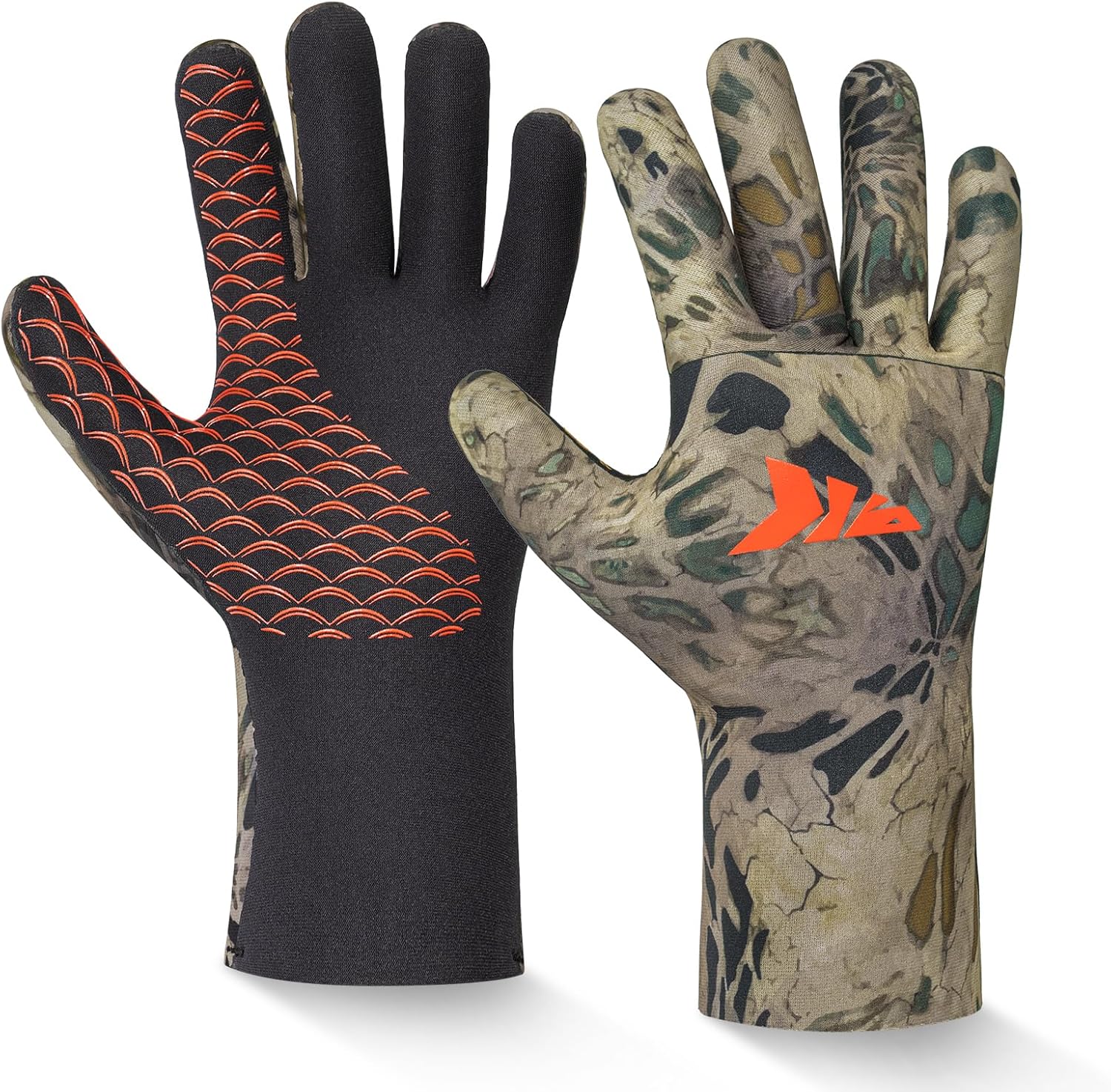
Fully closed, 100% waterproof, fleece-lined, with a printed polymer grip pattern on the palm. Those are KastKing's own listed specs, and that combination is what you want the second your hands start touching water instead of just cold air.
Unhooking a walleye over the gunwale. Clearing slush out of an ice hole. Reaching into a livewell twice because the first fish went under the aerator. Every one of those soaks a glove, and a soaked non-waterproof glove in the 20s ends the trip whether you're ready to leave or not. Sealed construction fixes that failure mode instead of throwing more insulation at it.
You might also enjoy: Best Polarized Fishing Sunglasses Under $100 (2026): Top Picks Compared
What it costs you is knots. There's no bare skin here, so you'll strip one glove to retie, and that's the deal you're accepting.
Who it's for
Boat anglers, ice anglers running tip-ups and dealing with slush, winter surfcasters, and anyone whose hands are wet inside the first fifteen minutes.
Pros and cons
- Genuinely waterproof rather than water-resistant, which is the whole point at this price
- Fleece lining under a sealed shell, so wet gear doesn't wick cold to your skin
- Printed polymer grip pattern on a neoprene palm, for a slimy fish and a wet rod handle
- No fingertip access at all
- Sealed gloves trap sweat, so on a 45°F day these are too much glove
Price: $33.99. Check the current price on Amazon.
Palmyth Convertible Flip-Top Mitt: Best for Waiting Out the Cold

A mitten shell that folds back and holds itself open with a magnet, leaving a fingerless glove underneath. Inside is 40g of 3M Thinsulate, a wind-resistant shell, and a pocket built for a chemical hand warmer. It also has the deepest evidence base of anything in this bracket at 4.3 out of 5 from 3,548 ratings.
Mittens beat gloves for a boring physical reason: your fingers share heat with each other instead of each one radiating on its own. The flip-top lets you bank that warmth while nothing is happening, then give it up for the thirty seconds it takes to retie or unhook.
Now the limit, because the manufacturer states it plainly and most reviews bury it: this mitt is recommended at 20°F or warmer and is not built for extreme cold or heavy snow. Forty grams is a light fill (Thinsulate is measured in grams per square meter), which is a dexterity-first choice rather than an expedition one. On a bucket at 5°F with wind, you want something heavier.
Who it's for
Anyone whose winter fishing involves waiting. Ice anglers watching a rod tip, steelheaders swinging a long run, deadstick and bobber-down fishing, anybody sitting still in the cold instead of moving to stay warm.
Pros and cons
- Mitten warmth when idle, bare fingers when working, no glove swap needed
- Magnets hold the mitt back rather than relying on a fold to stay put
- Heat-pack pocket, so a $1 warmer stretches the useful range further
- Wind-resistant shell and silicone grip
- Manufacturer says 20°F or warmer, not for extreme cold
- Wind-resistant is not waterproof, so this is the wrong glove for hands in the water
Price: $39.98, right at the top of the bracket. Check the current price on Amazon.
Wool or waterproof: which should you buy first?
If your hands touch water, buy waterproof. If they mostly touch line, buy wool. That single fork decides more about your winter comfort than insulation weight ever will, and it's the question nobody's buying guide asks you.
Wet skin dumps heat far faster than dry skin, and moving air multiplies the loss. The National Weather Service gives the example of 0°F with a 15 mph wind producing a wind chill of -19°F, at which point exposed skin can freeze in 30 minutes. Your fingertips in a fingerless glove are the exposed skin in that sentence. That isn't an argument against fingerless gloves, it's an argument for knowing which days they're wrong for. On a still 35°F morning the wool 3-cut is the best glove on this page; on a 20°F day with a 15 mph crosswind it's a liability.
You might also enjoy: Best Sun Protection Gloves for Fishing (UPF 50+): 2026 Buyer's Guide
My contrarian take: most anglers buy the sealed waterproof pair first, and for maybe half of them it's the wrong first purchase. If you fish from the bank, cast more than you catch, and release fish in the water without lifting them, you just spent $34 on gloves that sweat and can't tie a knot. Buy for the way you fish, not for the coldest photo on the product page.
Why is $40 the real floor for cold weather fishing gloves?
Because genuinely waterproof, fleece-lined winter fishing gloves start in the low $30s, and the useful ones cluster there. I started this list wanting three picks under $30 and only one survived. Padding it out with two more sub-$30 pairs would have meant recommending gloves I don't believe in, so the bracket moved instead of the standards.
Below about $20 you're mostly looking at knit gloves with a rubber-dot palm or thin uninsulated neoprene work gloves. Fine for raking leaves. Neither has a sealed seam or real insulation, and the first hour on cold water sorts that out for you.
How to pick the best cold weather fishing gloves for your water
Four things matter, and only four.
- Waterproof versus water-resistant. These are not synonyms and the product copy blurs them on purpose. Water-resistant means wind and spray. Waterproof means you can hold a fish. If a listing won't say the word waterproof outright, assume it isn't.
- Insulation weight. Thinsulate and similar synthetics are rated in grams per square meter. Forty grams keeps dexterity and handles moderate cold; heavier fills trade finger movement for warmth.
- Palm texture. A cold wet cork grip is slick and a bare-rubber palm is worse. Embossed, silicone-dotted or sharkskin-textured palms all work. A smooth palm is a dropped rod waiting to happen.
- Cut and sizing. Snug, not tight. A loose glove pumps warm air out every time you flex your hand, and a tight one strangles the circulation you're trying to protect. Between sizes with a liner underneath, go up.
One more thing that costs nothing: figure out which days actually hurt. Log air temp, wind and water temp alongside your catches for one winter and the pattern gets obvious. If you want somewhere to put that, try Bushwhack and poke at the conditions data on a stocked demo account first.
The step up if you can stretch past $40
The Glacier Glove Ice Bay is the long-running benchmark in this category at 4.4 out of 5 across 1,752 Amazon ratings, and it's $47.99, which puts it outside this guide's bracket. Naming it anyway. Glacier lists it as 2mm fleece-lined neoprene, 100% waterproof, blind-stitched and glued, with a one-piece sharkskin-textured palm on its product page. It sits at 4.4 out of 5 from 1,752 Amazon ratings.
If you fish open water in December most weekends, save the extra $14 and buy the Ice Bay instead of the KastKing. If you fish cold water four or five times a season, don't. The KastKing does the same job well enough that the gap isn't worth it at that frequency.
If you only buy one pair
The Palmyth Convertible Flip-Top Mitt at $39.98. It looks slightly ridiculous and I'd still buy it first, because it's the only one of the three that does two jobs instead of one: mitten warmth while you wait, bare fingers when you work, no swapping. Between the 20°F floor and the mid-30s it covers most of the winter fishing most people actually do.
Buy the Palmyth Wool 3-Cut instead if you retie constantly and stay out of the water, and buy the KastKing IceRiver instead if your hands are wet by the first fish. No single pair under $40 does all three jobs, and the pairs that claim to are the ones I'd trust least.
The gloves are also the cheapest part of the problem. A soaked sleeve cuffs cold water straight into a dry glove, so if your rain shell has a loose cuff, fix that before you spend another dollar on your hands.
Get fishing tips in your inbox
New guides, seasonal tactics, and gear picks — about once a month, no spam.