Best Fly Fishing Lines for Beginners (2026): 5 Lines That Make Learning Easier
 Cameron Spanos
Written by Cameron Spanos
Picking the best fly fishing lines for beginners is one of the most overlooked decisions in the sport. Most new anglers spend time agonizing over rod and reel choices, then grab whatever line is on sale. Bad idea. A poorly matched or low-quality line makes casting harder than it needs to be, and when you're still building muscle memory, every extra obstacle counts.
The good news: you don't need to spend $100 on a line. Several excellent beginner options land in the $40-$60 range. This guide covers what to look for and five lines worth buying in 2026.
What Fly Line Do Beginners Actually Need?
Before jumping to picks, a quick framework so you can evaluate any line you come across.
Weight Forward Floating: Start Here
For nearly every beginner situation (trout on dry flies, nymphing under an indicator, small streamers) a weight-forward floating (WF-F) line is the right call. Weight-forward means the heavy portion of the line is up front, which loads the rod more easily on shorter casts. Floating means the whole line stays on the surface, making mending and pickup far more manageable. Double taper lines have their fans, but weight-forward is the consensus starting point for new casters.
Match Your Line Weight to Your Rod
This is non-negotiable. A 5-weight rod gets a 5-weight line. Using the wrong weight makes the rod feel dead or uncontrollable. If your rod says 5wt on the blank, buy a WF5F line. Simple.
Slightly Overpowered Tapers Help Beginners
Several lines in this guide are built a half-size heavy, meaning a line labeled 5-weight actually weighs closer to a 5.5. This helps beginners feel the rod load with less line in the air, which is exactly what you want when you're still building timing and feel. It's a feature, not a flaw.
Best Fly Fishing Lines for Beginners
| Line | Best For | Price Range | Rating |
|---|---|---|---|
| RIO Mainstream Trout | Best overall beginner value | $35-$50 | 4.5/5 |
| Scientific Anglers Frequency Trout | Best budget pick | $45-$59 | 4.3/5 |
| Orvis Clearwater | Best beginner-friendly setup line | $40-$50 | 4.4/5 |
| Scientific Anglers Frequency Boost | Best for nymphing and streamers | $35-$45 | 4.4/5 |
| RIO Gold | Best step-up line once you're progressing | $70-$85 | 4.8/5 |
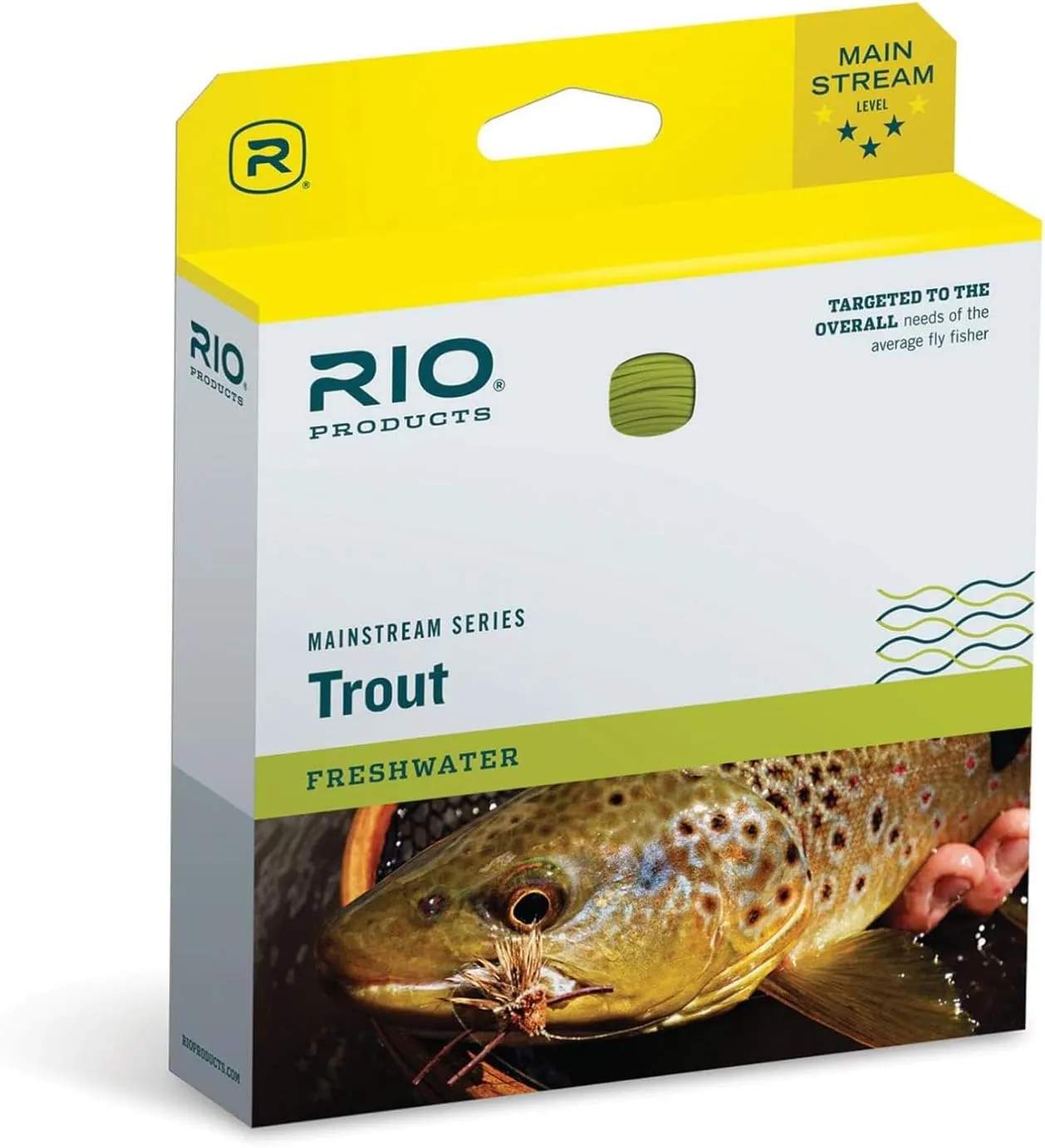
RIO Mainstream Trout: Best Overall Beginner Value
The RIO Mainstream Trout was designed specifically for new and intermediate anglers. RIO built it with a shorter head length and heavier overall weight so the rod loads easier with less line out of the guides. You feel the rod working sooner, which speeds up the feedback loop when you're learning timing.
Who It's For
- Beginners on a budget who want a name-brand line that performs
- Anglers fishing a 5-weight or 6-weight trout setup
- Anyone who wants a low-maintenance, easy-casting line they can beat up while learning
Pros & Cons
- Pro: Loads easily on short casts, ideal while you're building technique
- Pro: Made in RIO's Idaho factory with the same quality control as their premium lines
- Pro: Slick supple core resists memory in cool water
- Con: Not as smooth as RIO's higher-end lines like the Gold or InTouch
- Con: Limited color options
Runs $35-$50 depending on weight. Hard to beat at this price for a dedicated beginner line.
You might also enjoy: Spring Crappie Fishing Tips: Ice-Out to Spawn
You might also enjoy: Where Do Crappie Go After the Spawn? A Summer Brush Pile Depth Guide
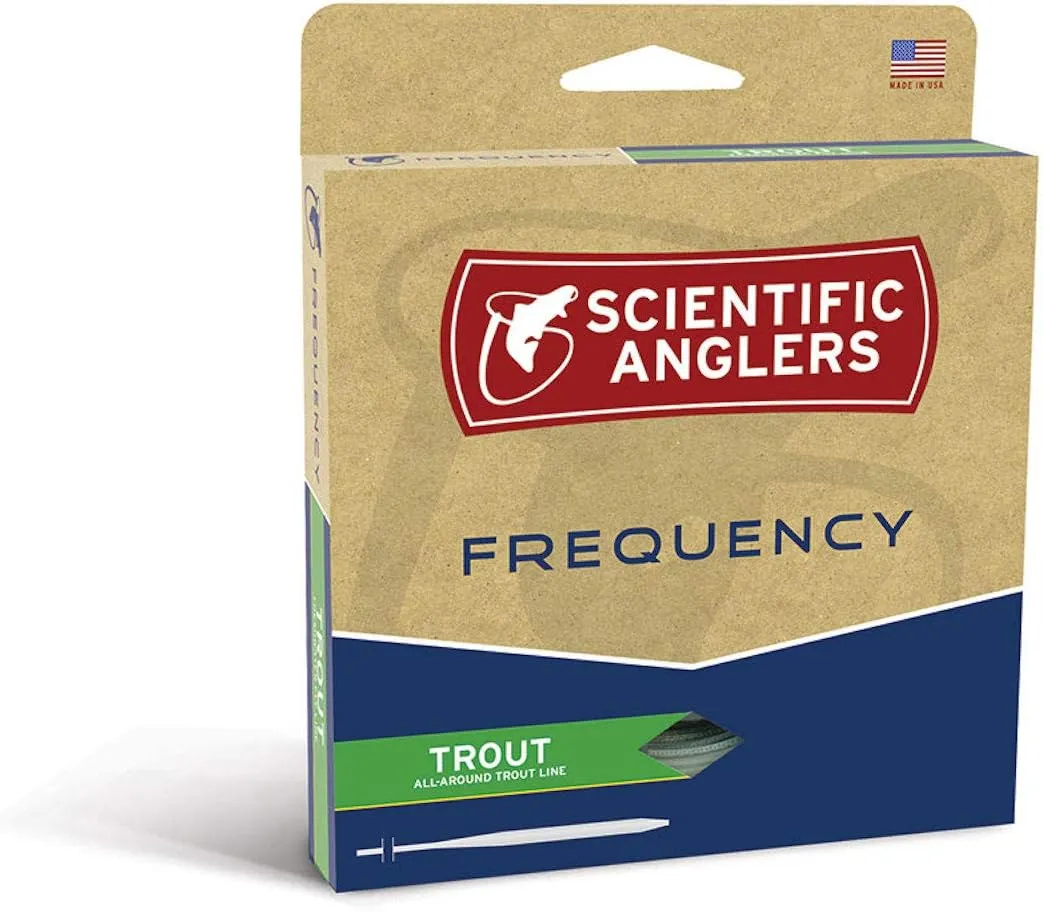
Scientific Anglers Frequency Trout: Best Budget Pick
The SA Frequency Trout is the value play. Scientific Anglers built the Frequency series with AST (Advanced Shooting Technology), their patented slick coating that reduces friction and helps the line shoot through guides. For a line under $60, that's notable. True to weight, it pairs well with slower-action rods that are common in beginner setups.
Who It's For
- Anglers who want the lowest entry price without going generic
- Beginners pairing with a budget fiberglass or medium-action rod
- Anglers who fish dry flies and want good line control on smaller water
Pros & Cons
- Pro: AST coating gives it more shoot than you'd expect at this price
- Pro: True to weight, excellent feel and presentation on short casts
- Pro: Welded loops on both ends for easy leader connection
- Con: Not built a half-size heavy, so it may feel light on faster-action rods
- Con: SA's premium lines are noticeably smoother
Available in the $45-$59 range. Great starter line if you're watching your budget closely.
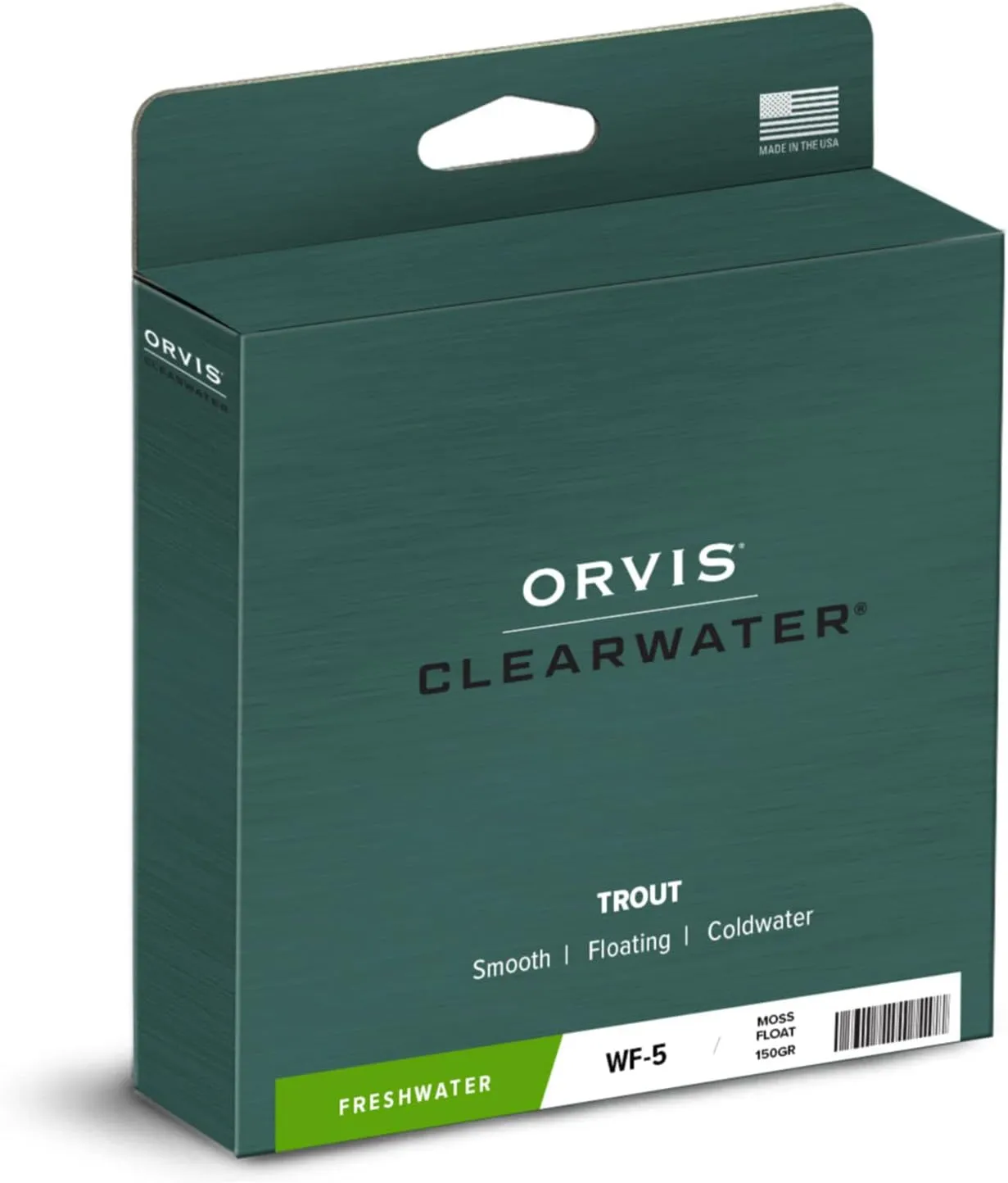
Orvis Clearwater: Best for Beginner-Friendly Setup
The Orvis Clearwater fly line is built a half-size heavy (just like the Mainstream) and features welded loops on both ends for easy rigging. It comes with a 40-foot head, which gives you a bit more to work with as you learn to extend your cast. If you're buying a complete Orvis setup, the Clearwater line matches the Clearwater rod perfectly.
Who It's For
- Beginners who bought an Orvis Clearwater outfit and want a dedicated line upgrade
- Anglers in cool to moderate climates fishing spring and fall trout
- Anyone who wants welded loops already attached, no rigging frustration out of the box
Pros & Cons
- Pro: Half-size heavy taper loads fast-action rods easily
- Pro: Welded loop front and back, no need to tie any nail knots
- Pro: 40-foot head gives room to grow your cast distance
- Con: Multifilament core can feel slightly stiff in very cold water
- Con: Not ideal for warm-water fishing or summer conditions
Priced in the $40-$50 range, solid value, especially for Orvis rod owners.
Scientific Anglers Frequency Boost: Best for Nymphing and Streamers
If your fishing leans toward indicator nymphing or chucking streamers rather than dry flies, the SA Frequency Boost is worth a look. Built a half-size heavy with extra mass toward the front of the head, it turns over split shot, heavy nymph rigs, and larger flies easily, exactly what you need when you're fishing subsurface. It also loads faster on short casts, which is a plus on small streams. You can log your nymph setups on Bushwhack and track what depth and rig you were using when fish hit.
Who It's For
- Beginners who want to nymph or swing streamers more than fish dries
- Anglers on faster-action beginner rods that need more line weight to load
- Anyone fishing larger flies or split shot regularly
Pros & Cons
- Pro: Half-size heavy build with front-weighted taper handles heavy rigs easily
- Pro: AST coating for smooth delivery and easy shooting
- Pro: Loads rods quickly on short casts
- Con: Not the best presentation line for delicate dry fly work
- Con: Slightly heavier feel may not suit all rods equally
Runs $35-$45. An underrated option in the beginner category.
RIO Gold: Best Step-Up Line Once You're Progressing
The RIO Gold is the line most fly fishing instructors reach for in casting lessons. It has a longer back taper for better distance control and AgentX coating that repels dirt and floats high. You'll notice the performance jump from the Mainstream when your cast starts to develop. It handles fly sizes #22 to #2 with good presentation, one line that covers everything from tiny midges to size 2 streamers.
You might also enjoy: How to Catch More Fish After a Bad Trip: Turn Slow Days Into Data
You might also enjoy: Chatterbait vs Swim Jig for Summer Grass: Which One to Tie On and When
Who It's For
- Beginners who want to buy once and keep the line as they improve
- Intermediate anglers upgrading from a budget line
- Anyone who wants a single line that works well for dries, nymphs, and streamers
Pros & Cons
- Pro: Longer back taper gives better control at distance as your cast develops
- Pro: AgentX coating repels dirt and floats well for longer
- Pro: Welded loops on both ends, color-coded head/running line
- Con: Pricier than the other picks at $70-$85
- Con: Not built heavy, may feel light on very fast or stiff rods for beginners
If budget isn't a constraint, the Gold is worth buying from the start. You won't outgrow it.
Fly Line Buying Guide: What Actually Matters
Taper
Weight-forward taper is right for almost every beginner. The front-heavy design loads the rod faster and makes shorter casts easier to execute. Double taper lines can be useful on smaller streams for delicate presentation but are harder to learn on. Skip them for now.
Line Coating
A slicker coating means the line shoots through the guides with less friction and floats better longer. Cheaper lines use basic PVC coatings that wear faster. Mid-range lines from RIO and SA use proprietary coatings (AgentX, AST) that perform noticeably better. You'll feel the difference after a few sessions.
Head Length
Shorter head = easier to load on short casts. Longer head = more control at distance. As a beginner, a shorter head (around 35-40 feet) is forgiving. The Mainstream and Frequency Boost are both built with beginners in mind on this front.
Welded Loops
Make sure your line has welded loops. These are factory-finished loops at the end of the line for attaching your leader. Without them, you'd need to tie a nail knot, a skill worth learning eventually, but not something you want to deal with on day one. Every line in this guide includes welded loops.
Our Pick
For most beginners, the RIO Mainstream Trout is the right call. It's purpose-built for new anglers, priced under $45, and backed by RIO's manufacturing quality. If you plan to nymph or fish streamers primarily, upgrade to the SA Frequency Boost instead. And if you're willing to spend a bit more and want one line for the long haul, buy the RIO Gold. It'll still be in your bag five years from now.
Once you're fishing, Bushwhack makes it easy to log what's working, including which flies you're throwing and the conditions when fish hit. Track it now so you're not guessing next season.
Get fishing tips in your inbox
New guides, seasonal tactics, and gear picks — about once a month, no spam.